Short lists are harder to write.
Anything can be padded with cereal and called complete. Making a food out of eight ingredients means every one of them has to earn its place.
What goes in
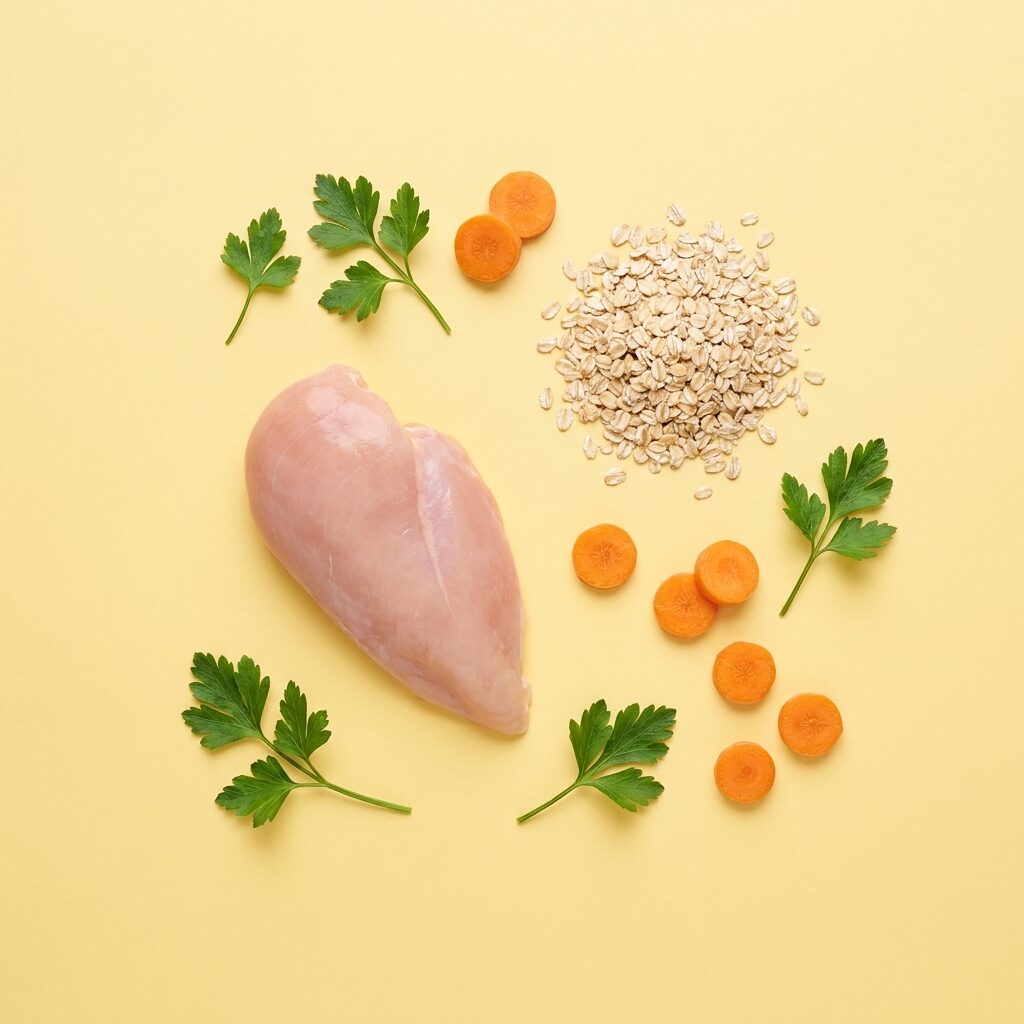
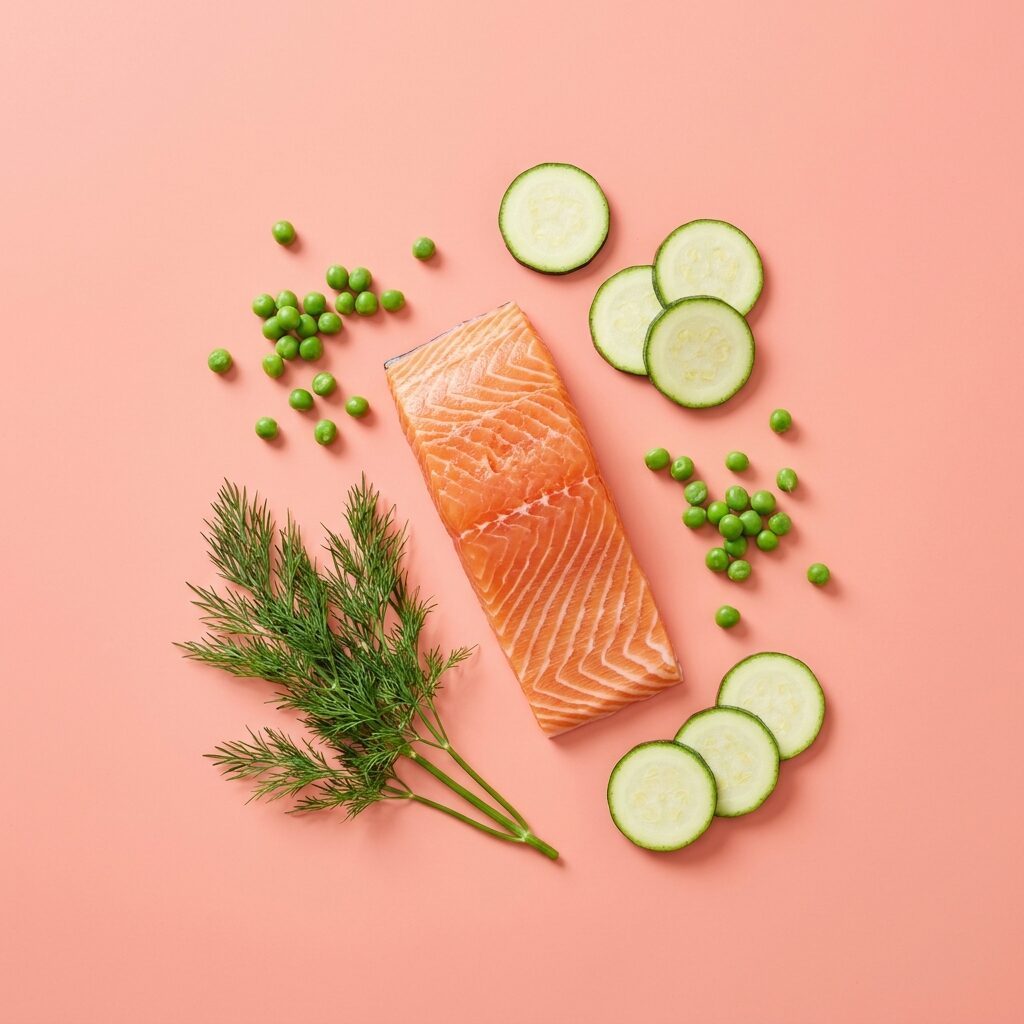
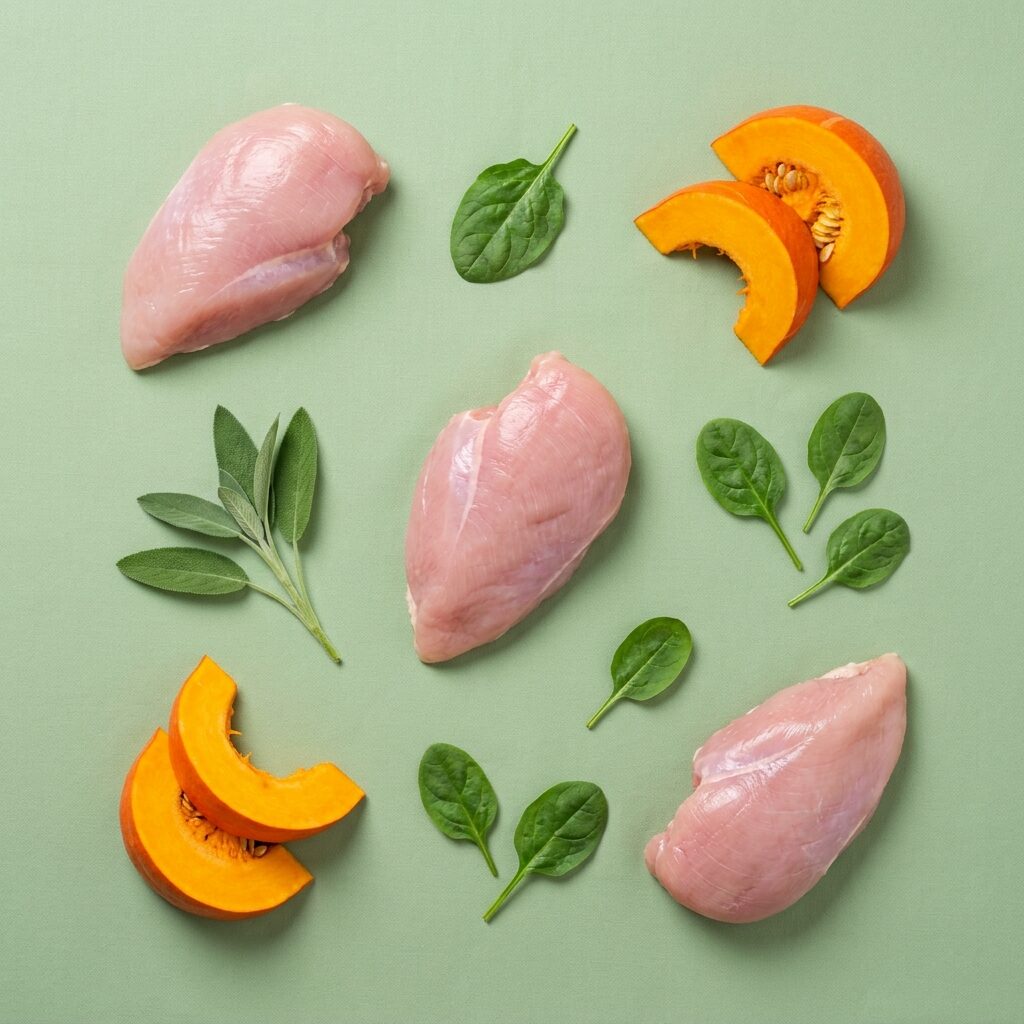
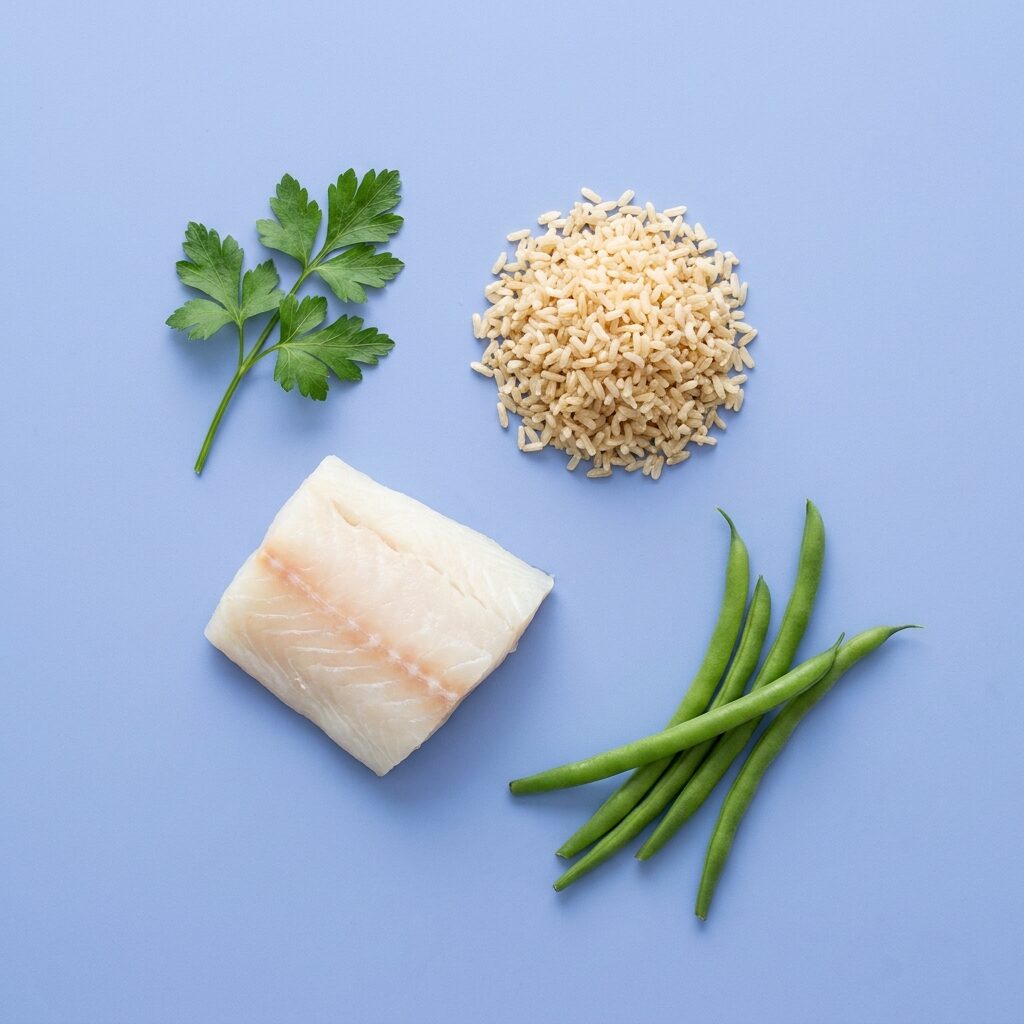
- 62% named muscle meat or fish. Chicken, beef, salmon, turkey or white fish. Named, so you know exactly which animal it came from.
- Organ meat, about 5%. Liver mostly. It is where the vitamin A, iron and B vitamins live, and dogs and cats have always eaten it.
- One wholegrain, 6 to 8%. Oats, pearl barley or brown rice. Slow energy and fibre that keeps digestion regular.
- Two vegetables, about 7%. Carrot, swede, pumpkin, peas, courgette, spinach or green beans, depending on the recipe.
- A herb. Parsley, thyme, dill or sage. A small amount, mostly for aroma, which matters more than flavour to both species.
- Stock from the same animal. Not water. It is what makes the texture soft enough for an old cat with bad teeth.
- Vitamins and minerals. The legally required set for a complete food, plus added taurine in everything a cat can eat.
What stays out
- Meat and animal derivatives. The phrase that lets a manufacturer change the animal from batch to batch without changing the label.
- Cereal fillers. Wheat, maize and soya are cheap ways to add bulk. They are not why a dog evolved to want dinner.
- Sugars and caramel colour. Added to make gravy look rich to the human buying it. The dog does not care what colour it is.
- Artificial preservatives. Not needed. Cooking the food inside a sealed tin does the job, which is the whole point of a tin.
- Plant protein boosters. Pea protein and potato protein raise the protein percentage on the label without raising the meat.
- Forty product lines. Not an ingredient, but the same idea. We would rather get one recipe right five times.
The five ingredient sets
What each recipe is built from, before the stock, vitamins and minerals go in.
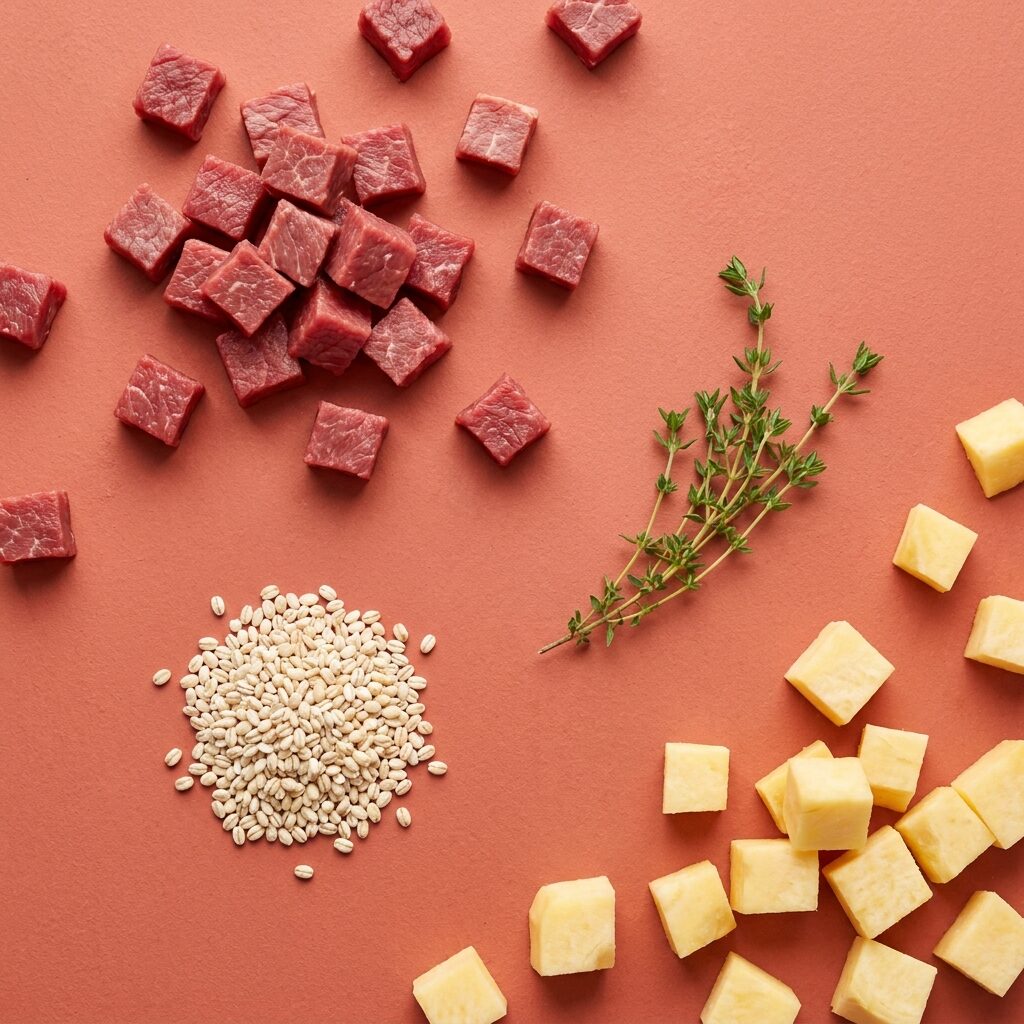
Where it comes from
The chicken, beef and turkey come from farms within forty miles of the kitchen, all of them Red Tractor assured. We use the cuts that the human food trade does not want, which is not a compromise: it is thigh meat, trim and offal, and it is what a dog would choose first anyway.
The salmon and white fish come from Scottish waters through a supplier in Grimsby, and both are certified against overfishing. The vegetables are British and seasonal wherever the harvest allows, which is most of the year for carrot, swede and pumpkin.
Nothing is shipped in frozen from outside Europe, which is unusual in this trade and is most of the reason our food is not the cheapest.
See the kitchenFormulated with a vet, not a marketing department.
Every recipe was signed off by Dr Aoife Kelleher MRCVS against FEDIAF nutritional guidelines for complete pet food. She still reviews them once a year.