Two of us, one arch, one old machine

Copperline started in 2017 with a lease on a leaky railway arch, a roaster older than both our dads, and a strong opinion about paying farmers properly.

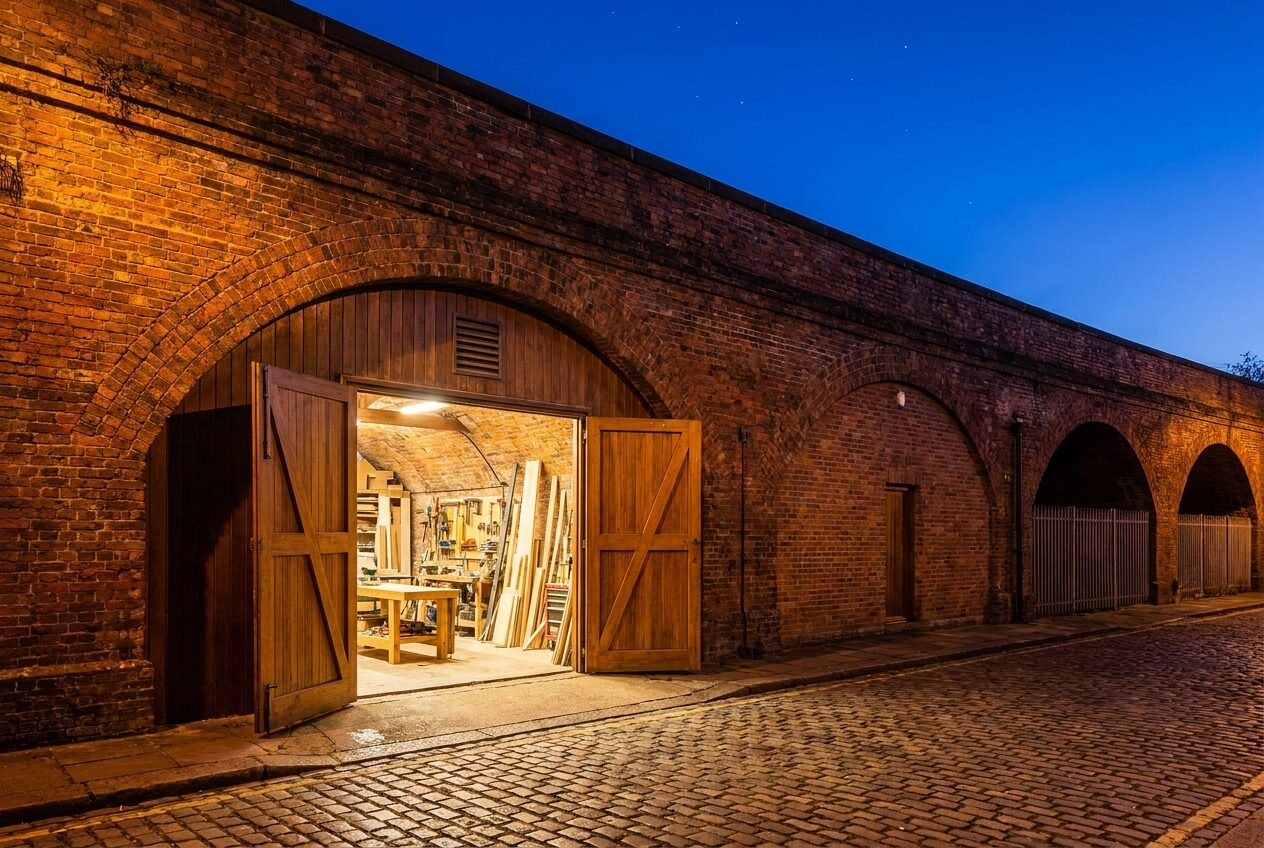
Victorian brick railway arch at dusk with warm light spilling from the workshop doors onto a cobbled lane

Arch 11, Blast Lane

The arch sits under the old South Yorkshire Railway viaduct, a two-minute walk from the canal basin. When we took the lease in spring 2017 it had a dirt floor, a family of pigeons and a hundred and forty years of soot in the brick. It also had three-phase power, a landlord who didn’t mind gas lines, and rent we could actually afford.

We tanked the walls, poured a floor, and kept everything else as we found it. Trains still rumble over the top mid-batch. You get used to it — the espresso machine rattles at 8:14 every weekday morning, regular as a kettle.

The pair of us

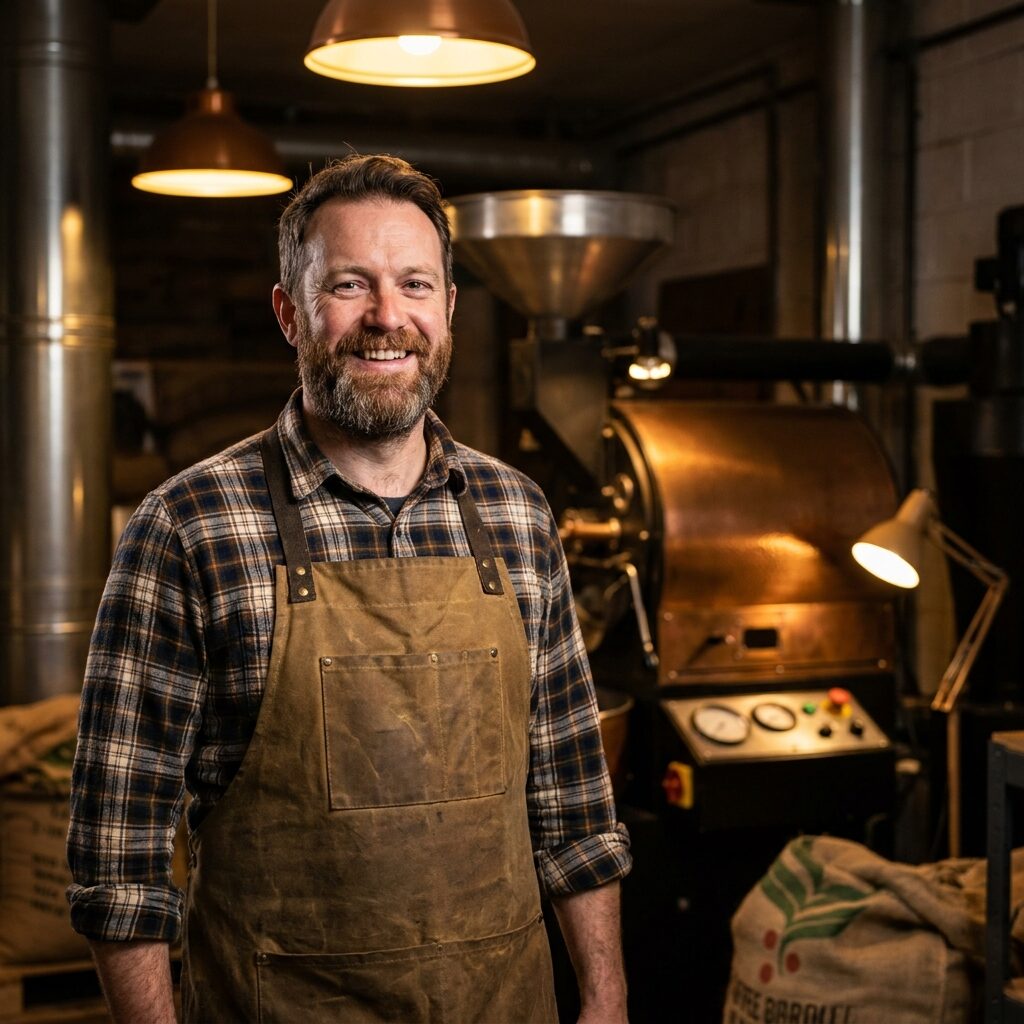
Dan Whitmore, a bearded man in a work apron, standing in the roastery in warm light

Dan Whitmore

Roaster · ex-brewery engineer

Dan spent eleven years keeping fermentation vessels and steam plants alive at a Barnsley brewery before deciding coffee machinery was more interesting than beer machinery. He runs the Probat, keeps the roast logs, and has strong feelings about drum speed. If it hisses, drips or seizes at Arch 11, Dan fixes it.
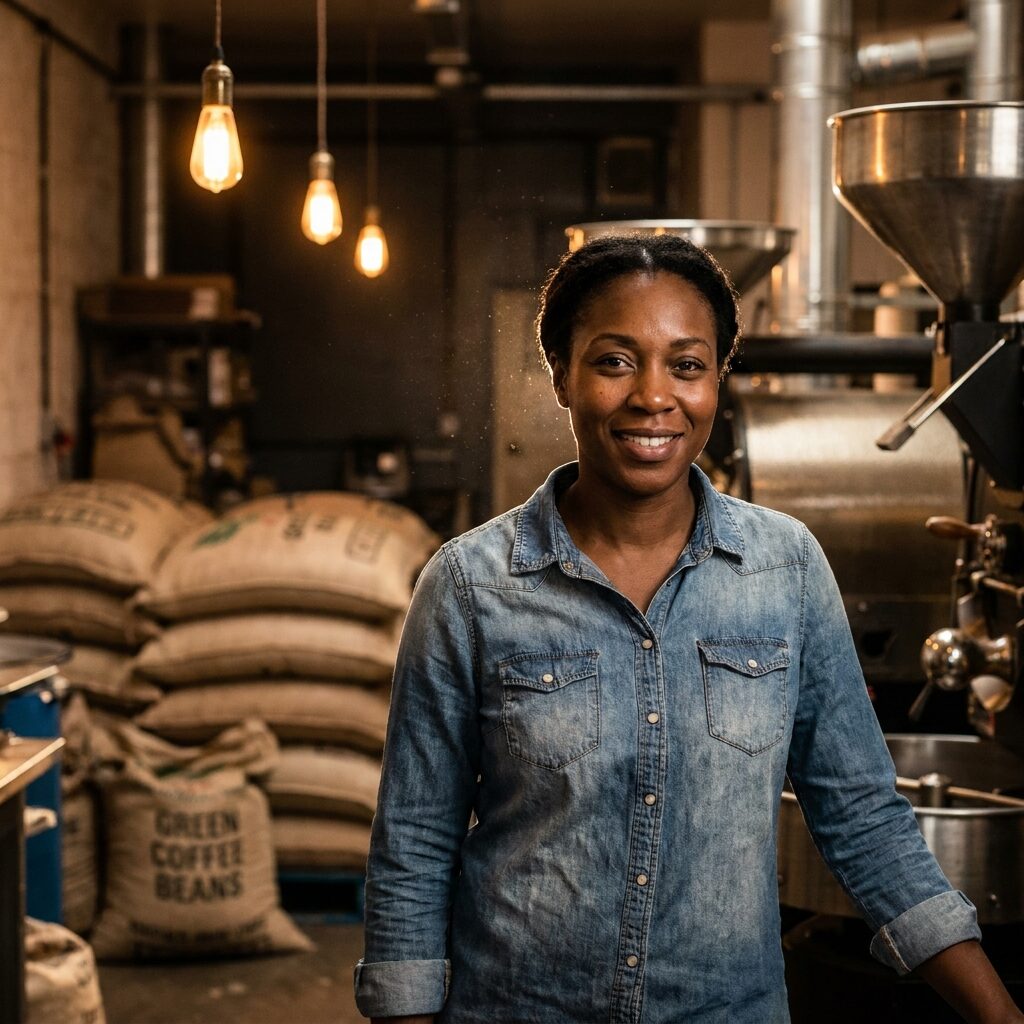
Amara Osei, a woman in a denim shirt, standing in the roastery in front of sacks of green coffee

Amara Osei

Green buyer · head of quality

Amara came up through quality control at a green importer in London, cupping hundreds of tables a year before moving north. She buys every lot we roast, runs the Saturday cupping bar, and scores samples blind so nobody’s reputation gets a free pass. Her rule: the coffee speaks, the paperwork proves it.

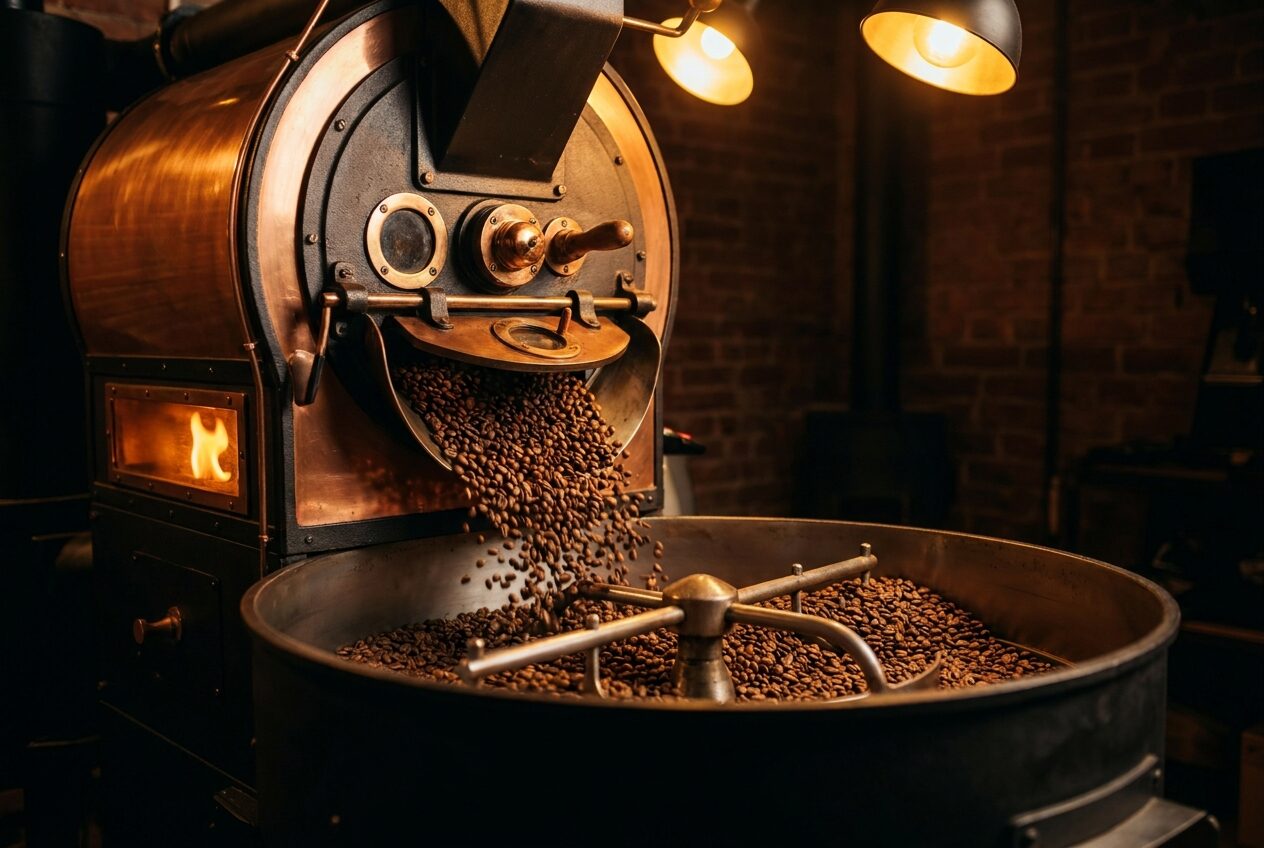
The rebuilt 1958 Probat drum roaster in copper and cast iron with beans pouring into the cooling tray

Rebuilding the Probat

She’s a 12 kg Probat, built in Emmerich in 1958, and she spent fifty years working in a family roastery near Hamburg’s Speicherstadt until the firm closed in 2015. Dan found her on a German machinery auction site at 2am, bid more than we’d agreed, and drove a hired Luton van to Hamburg and back — 1,400 miles, two ferries — to collect her.

The rebuild took eight months of evenings. The drum shaft was worn oval, so it went to a machine shop in Attercliffe to be re-turned and sleeved. The original burners were unsafe and unsalvageable; Dan replaced them with new gas jets and modern flame-failure valves, then fitted a temperature probe where the old thermometer well had rusted through. The bearings, belts and wiring are all new. Everything you can see — the copper cladding, the cast doors, the badge-less fascia — is 1958.

First batch under the arch: 14 November 2017. A washed Sidamo. We still have a jar of it on the shelf, and no, you can’t taste it.

Inside the arch

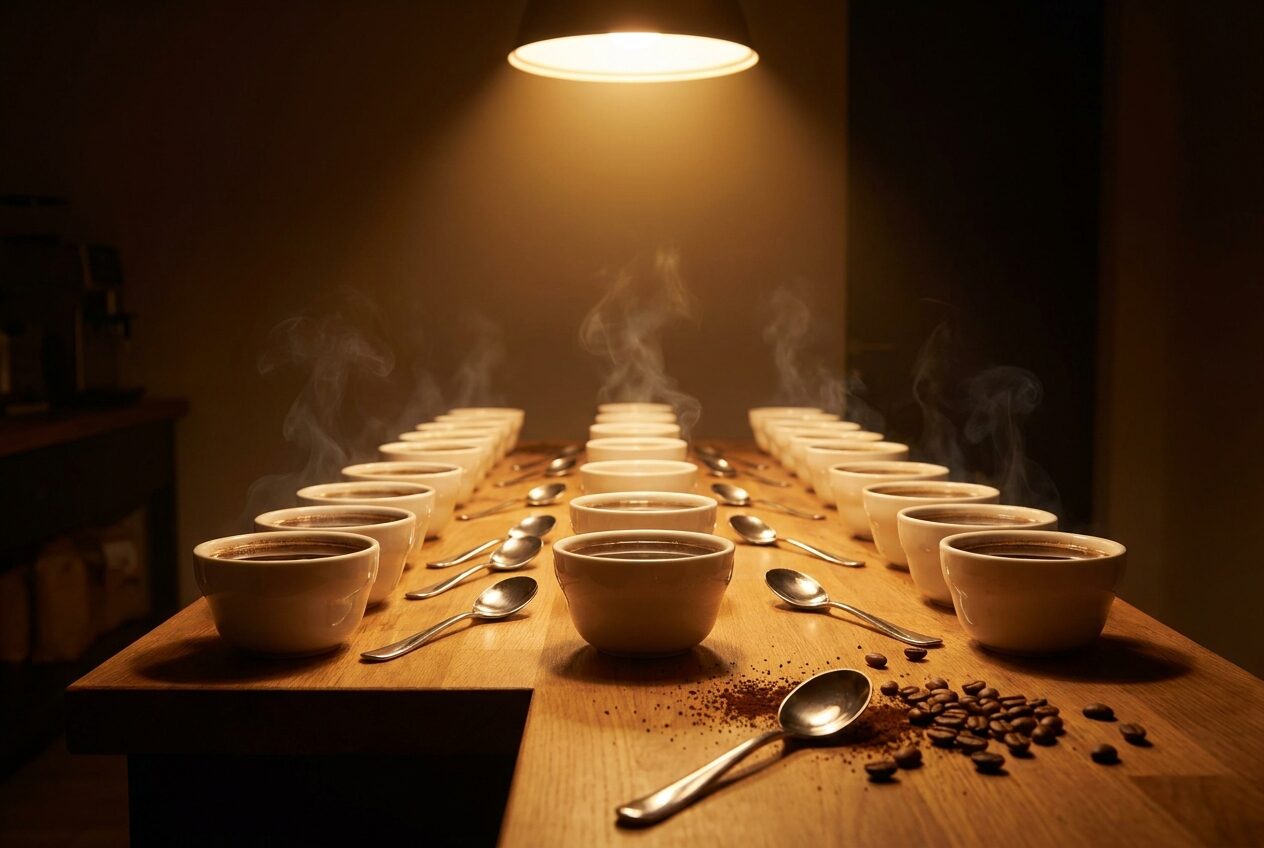
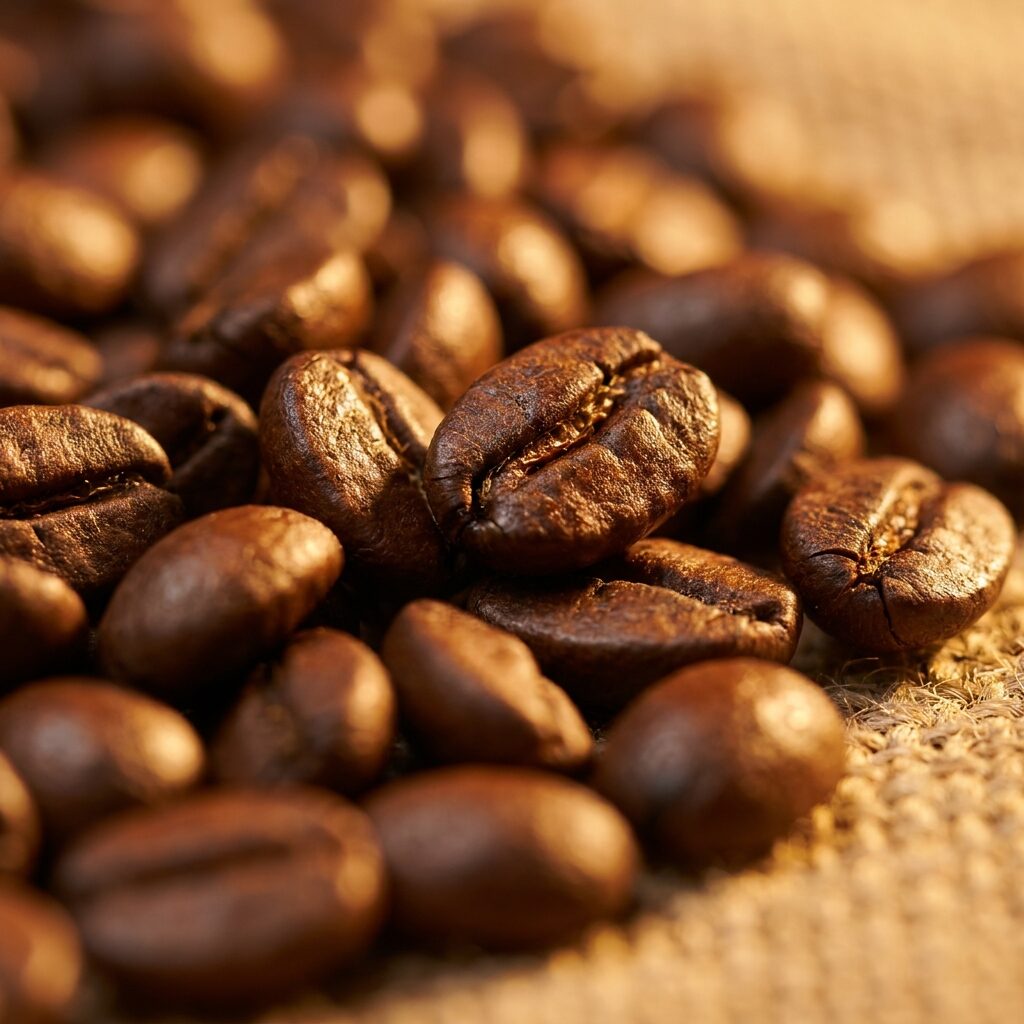
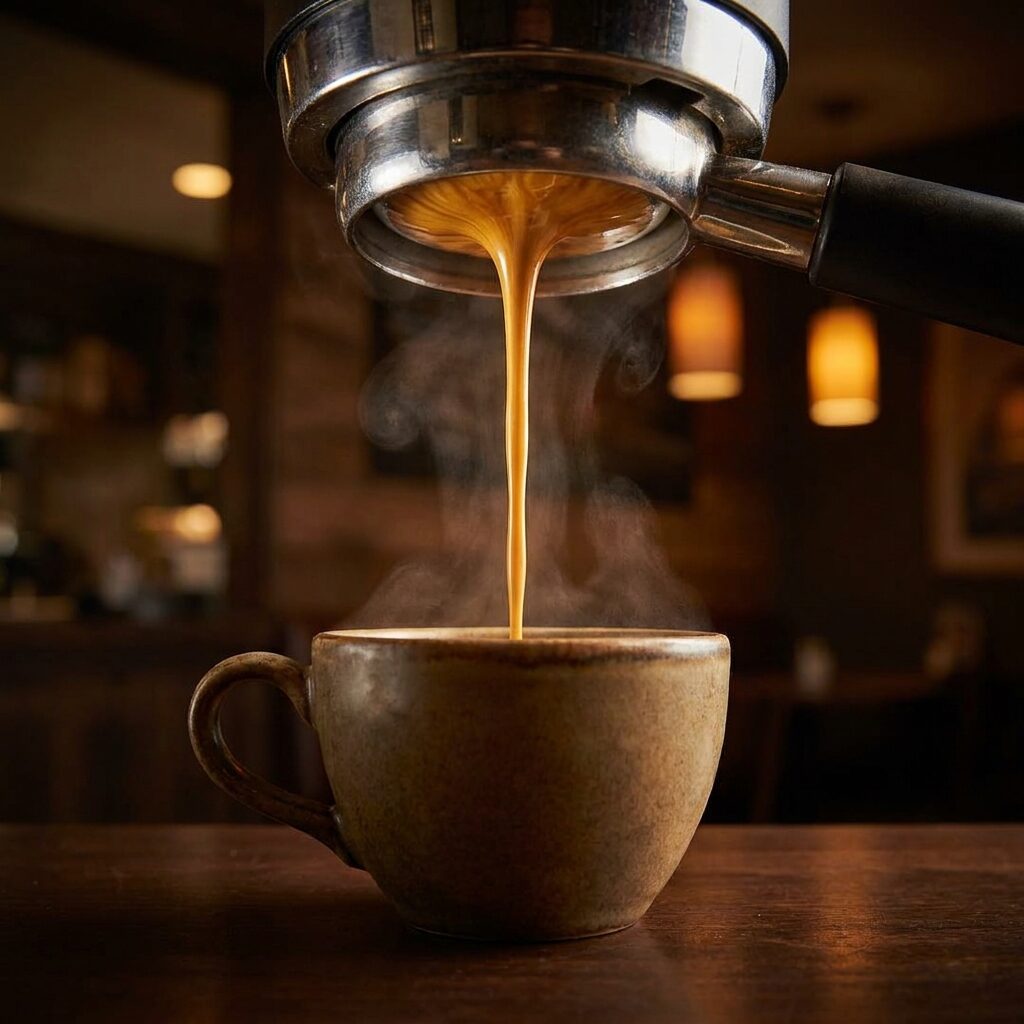
Cupping table with rows of white bowls and spoons under a warm spotlight Freshly roasted coffee beans photographed close up in warm light Espresso extracting from a bottomless portafilter into a ceramic cup

2017 to now

  1. 2017

    Lease signed on Arch 11 in April. Probat rebuilt by November. First batch — a washed Sidamo — on the 14th.

  2. 2018

    First wholesale account: Brick & Ember in Kelham Island. They’re still with us.

  3. 2019

    Amara’s first buying trip to Ethiopia. We commit to Chelbesa and haven’t skipped a harvest since.

  4. 2020

    Café orders vanish overnight; the webshop keeps the lights on. We post 11,000 letterbox bags in twelve months.

  5. 2021

    First direct contract in Colombia — El Vergel, Huila. Weekly delivery round across South Yorkshire starts.

  6. 2022

    Saturday cupping bar opens. Nine bowls, one bench, no bookings. Still free.

  7. 2023

    New burners again — Dan wasn’t happy with the flame spread. Roast consistency improves measurably; he was right, again.

  8. 2024

    Twenty wholesale accounts. We cap it there. Better twenty cafés pouring it well than fifty pouring it badly.

  9. 2025

    We publish our green-buying prices next to every coffee at the cupping bar. Nobody asks us to stop.

  10. 2026

    Ninth birthday. Same arch, same machine, same two of us — plus four more of us now, to be fair.

What we hold to

01

Pay properly, show the numbers

Every contract above C-price, every FOB figure printed and pinned up at the cupping bar. If we can’t afford to pay well for a coffee, we don’t buy it.

02

Roast less, roast better

Two roast days a week, ten-kilo batches, every batch logged and cupped. We’d rather sell out on a Friday than post you a stale bag on a Monday.

03

Fix things, don’t replace them

The roaster is 68 years old. The grinder is 15. The van has 140,000 miles on it. Things that can be repaired, get repaired — it’s cheaper, and it’s right.