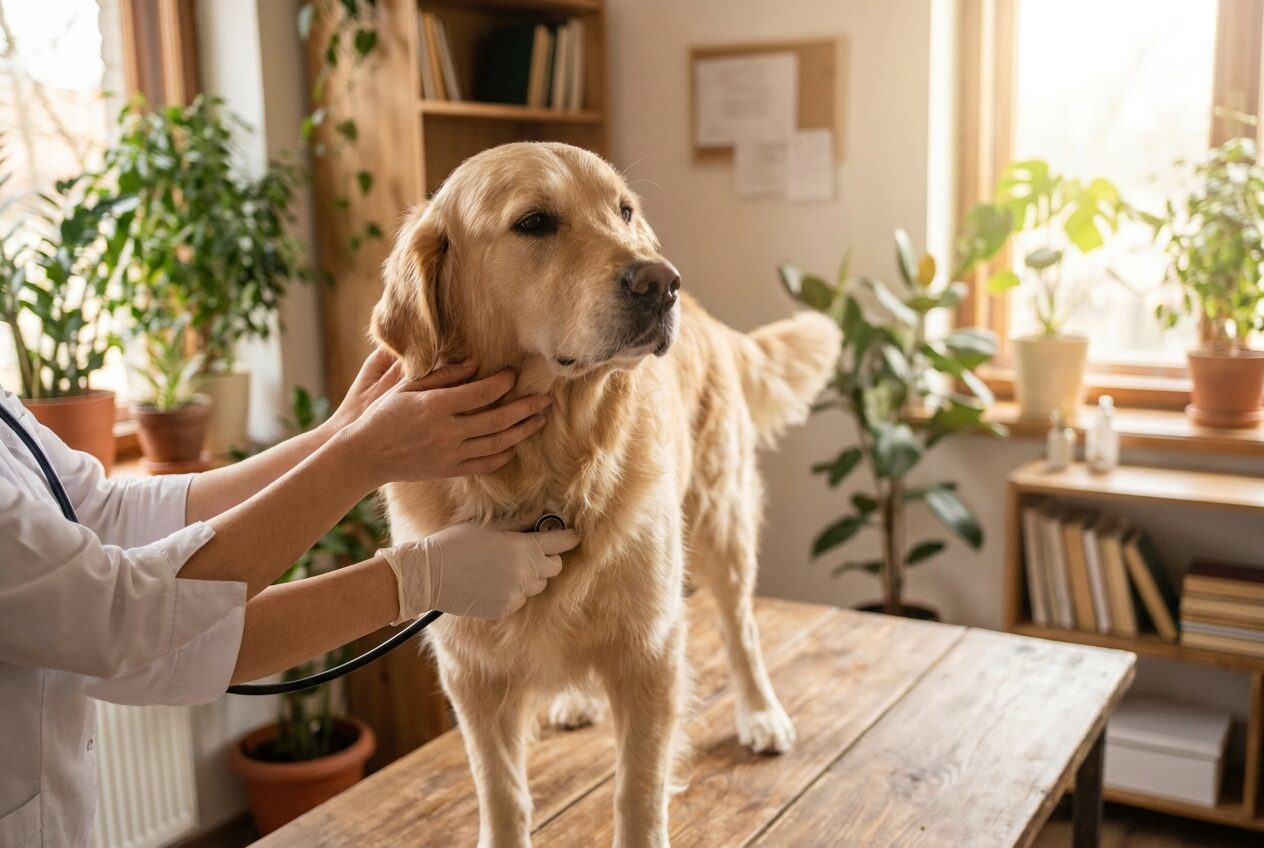
Short, practical notes from Eleanor and Sam — the things we find ourselves saying most often in the consult room, written down so you can read them at 11pm.
The consult room, mid-conversation. Most advice starts exactly like this.
Lungworm in Bath: it's here, and it's preventable
12 March 2026 · Dr Eleanor Voss
We confirmed six cases of lungworm in Bath last year, mostly in dogs that eat snails and slugs or drink from puddles — which is to say, dogs. The parasite can cause coughing, reluctance to exercise and unusual bleeding, and the important part is this: not every flea-and-worm product covers it. If your dog is on our parasite plan, they're covered. If you buy your own, check the packet — the ingredient you're looking for is moxidectin — or ring us and we'll check with you, no charge. Prevention is monthly and cheap. Treatment is neither, so this is one worth doing properly.
Chocolate: what to do in the first ten minutes
14 December 2025 · Dr Eleanor Voss
Don't wait for symptoms. Find the wrapper, estimate what's missing, and ring us on 01225 496 073 — or out of hours, Bath Emergency Vets on 01225 496 999. Have your dog's weight to hand if you know it: toxicity depends on body weight and cocoa content, so dark chocolate is the dangerous one and white chocolate barely counts. If treatment is needed it usually means making them sick within two hours of eating it, which is why speed matters more than certainty. December rule of thumb: tree chocolates are the annual repeat offenders. Hang them high or, better, don't hang them at all.
Fireworks season: the plan starts in September
9 September 2025 · Dr Sam Herrera
A good fireworks plan starts roughly eight weeks before the first rocket. From September: build a den somewhere your dog already chooses to sleep, play firework recordings quietly at dinner time and nudge the volume up over the weeks, and keep your own reaction boring — dogs read us constantly. For cats, it's simpler: keep them in after dark from late October and give them somewhere high to sit. If last year was bad, book an appointment in early October. There are genuinely effective medications now, and the old-style sedatives that simply froze frightened pets in place are long gone. Our nurses will happily review your den-building homework.
Senior cats and the slow slide: weight loss you can't see
22 January 2026 · Dr Sam Herrera
Cats are experts at hiding weight loss under a winter coat and a dignified manner. If your cat is over ten, weigh them monthly — bathroom scales, with and without the cat, are perfectly good enough. A drop of 200g in a 4kg cat is five per cent of their body weight; in a person that's half a stone, gone without trying. The usual culprits — thyroid, kidneys, teeth — are all far more manageable caught early, and two of the three show up on a simple blood test. Weight checks with our nurses are free. Drinking more than usual is the other quiet flag worth acting on.
Puppy socialisation: the window is shorter than you think
5 May 2026 · Dr Eleanor Voss
The prime socialisation window closes at around 14 weeks — often before the vaccine course finishes. That doesn't mean staying home; it means carrying your puppy out into the world: traffic, umbrellas, bin lorries, people in hats, calm vaccinated dogs belonging to friends. The aim is pleasant, brief and varied, not overwhelming. One good five-minute experience beats an exhausting afternoon. Puppies that meet the washing machine, the vacuum and the vet before 14 weeks tend to shrug at all three for life. Our £25 puppy starts include a socialisation checklist and a wander round the clinic while nothing scary happens — which is rather the point.
Does my rabbit need a friend? (Yes.)
17 April 2026 · Dr Sam Herrera
Rabbits are social animals, and a solitary rabbit is a lonely one — however much you love them, you are not fluent in rabbit. The gold standard is a neutered male–female pair. Bonding takes patience: neutral territory, swapped bedding, short supervised meetings over a couple of weeks. Never put two strangers straight into one hutch and hope. Guinea pigs are not a substitute — different language, different diet, and the occasional bout of bullying in both directions. If you're thinking of bonding a pair, ring us first: we'll talk you through it, and the local rescues usually have friendly, already-neutered candidates waiting.
Worried about something specific?
Advice pages are a starting point, not a diagnosis. If something feels wrong, ring us on 01225 496 073 — a two-minute phone call is free, and "I'm probably worrying about nothing" is our favourite kind of call to end early.
Rather ask in person?
Book a visit, or start with a free nurse weight check.