THE JOURNAL · WRITTEN BY GUIDES, NOT MARKETING

Field notes

Trip accounts, kit opinions and the occasional apology to a pair of knees. Everything here happened; the good bits and the turned-back bits.

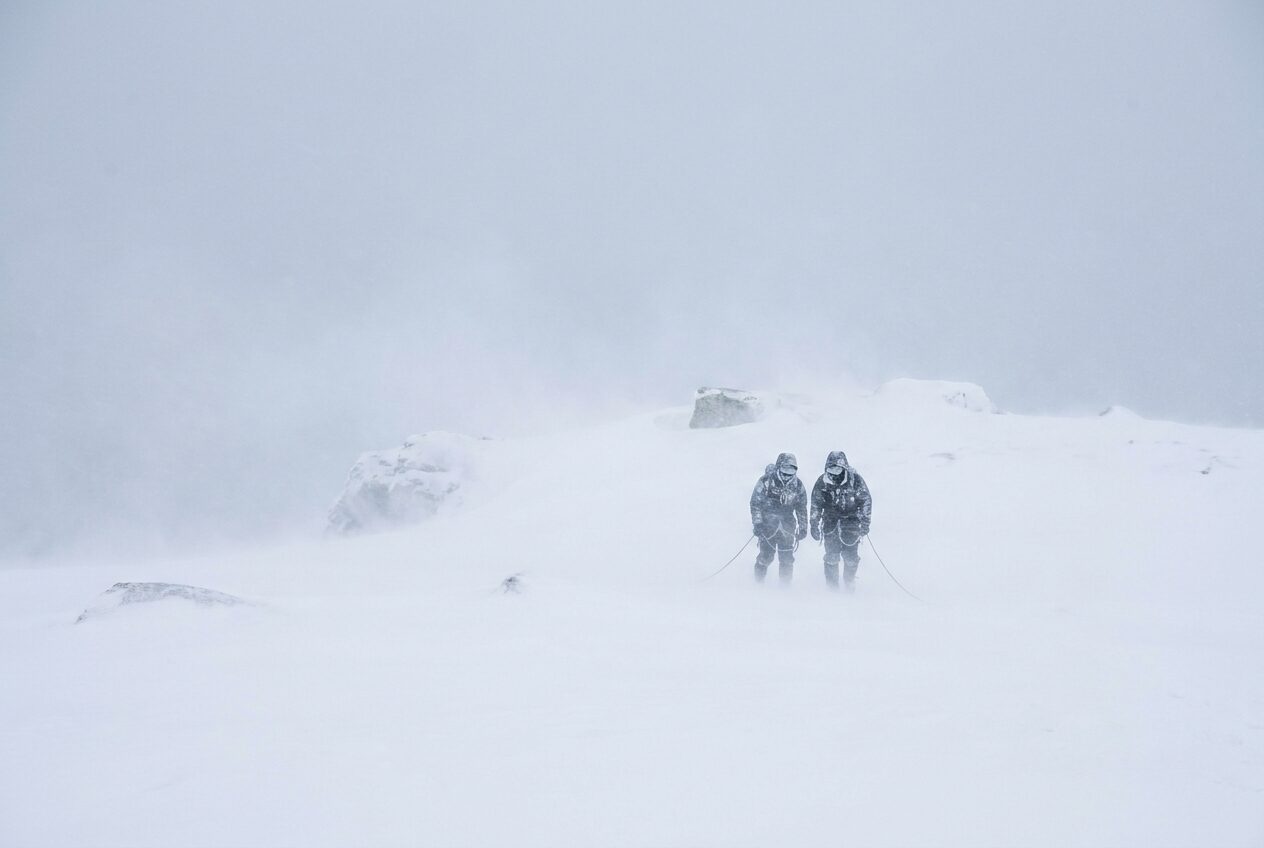
Two roped figures barely visible in near-whiteout blizzard conditions on a plateau

The day we didn't cross

The forecast said the front would pass north of us. The front had not read the forecast. By ten we had cloud on the deck; by eleven the wind was carrying sleet flat across the plateau and visibility was eight metres — I measured it against the rope, because that is what the rope is for. Eight metres, in country where the next handrail feature was a lake shore two kilometres away.

We stood in a huddle and did the arithmetic out loud, because the group deserves to hear it. Rauhelleren hut: nineteen kilometres ahead, across two swollen rivers. Heinseter: six kilometres back, on a bearing we had walked that morning, every leg of it logged. The trip plan said west. The maths said east.

We went east. Three hours of pacing, counting, checking — the group taking turns at the compass because moving legs stay warm. At two we were drinking coffee by the Heinseter stove, watching the storm eat the window. Nobody had summit fever. Somebody asked if we'd failed. We looked at the weather and voted: driest failure any of us had ever been part of.

We crossed two days later, in sunshine. The Vidda didn't notice either way. That's rather the point of it.
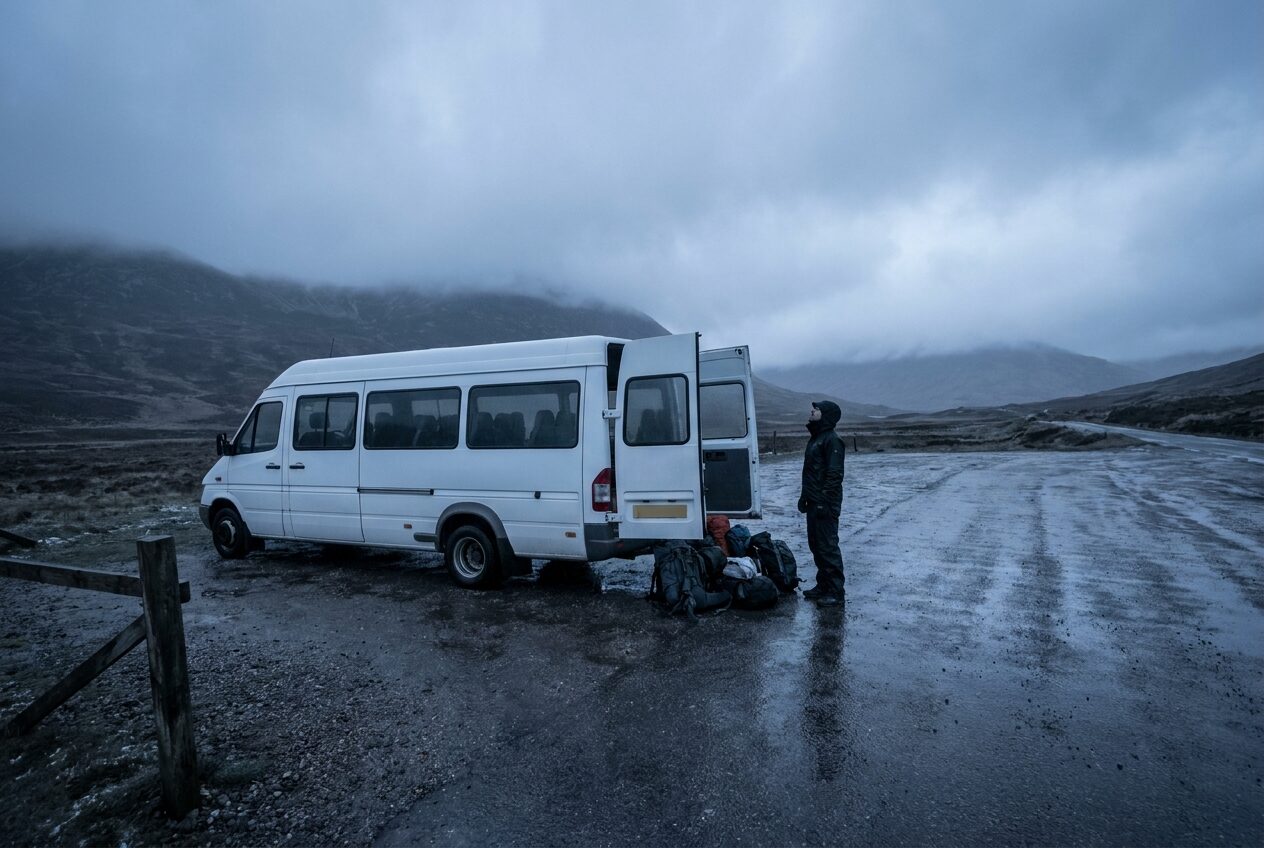
A plain white minibus alone in a sleet-lashed Cairngorms car park at dawn, rucksacks stacked by the open door, cloud hiding the mountains

The trip we cancelled

The winter skills course that started on 6 February lasted one day. The second morning put 85mph gusts on the plateau, the avalanche forecast at Considerable on every aspect the syllabus needed, and a thaw-freeze crust that made the teaching dishonest even where it was safe. You can run a walk in that. You cannot run a course.

So we didn't. We taught crampon work on a frozen bank below the treeline, walked out through Ryvoan in the flat white roar, and cancelled the remaining days that evening — full transfer or full refund, everyone's choice, money moved the same week. Six of the eight rebooked before the minibus reached Aviemore. The other two sent a photo from their March course: blue sky, obviously.

Cancelling cost us about £2,100 and bought the only thing this company actually owns — that when we say grade 3, or safe, or go, people believe us. The full decision, timestamps and the three gates that failed are reconstructed on the safety page. We publish it because the sales pitch and the safety policy should be the same document.

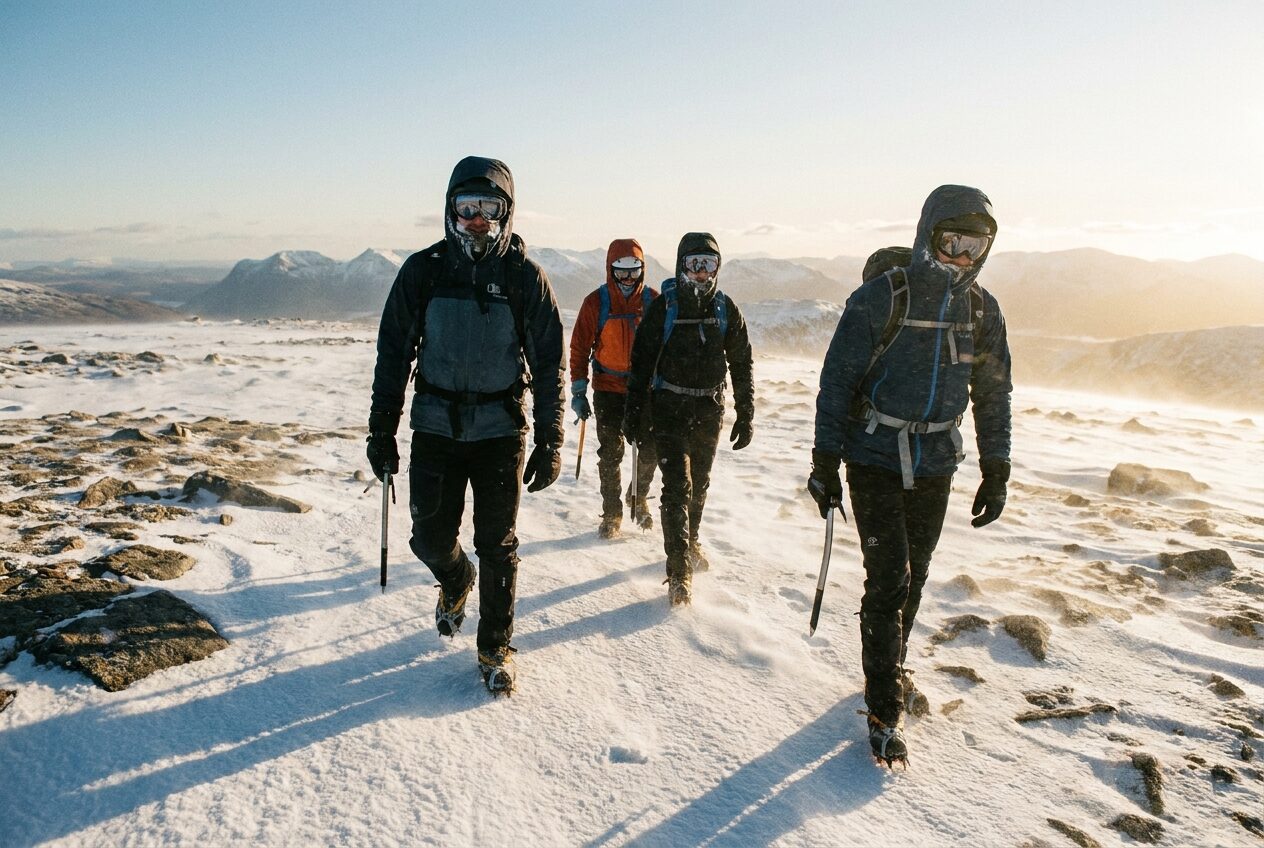
Winter walkers in spindrift on the Cairngorm plateau, hoods up against the wind

The £38 base layer that outlived the £120 one

Every January we audit the kit cupboard: everything a guide has worn to destruction the previous year gets weighed, inspected and argued about. This year's findings, published in the interest of your bank balance.

The £38 merino-blend base layer bought from a supermarket outdoor range in 2022 has now done roughly 190 mountain days, including two Ladakh seasons. It has one darned elbow. The £120 branded equivalent bought the same month died at the shoulder seams in 14 months. Marketing budgets are not insulation.

Other survivors: a £12 fleece hat (nine years, two continents), army surplus liner gloves at £6 a pair (we buy them in fives), and every single item that has ever been darned rather than replaced. The graveyard: anything described as "ultralight" that met Cairngorm granite, and one £200 soft shell that a client's dog ate at a car park in Braemar — no warranty covers optimism.

The rule stands: spend on boots and shell, save on almost everything else, and ask us before you buy. The full list goes out with every booking. It fits on one page.

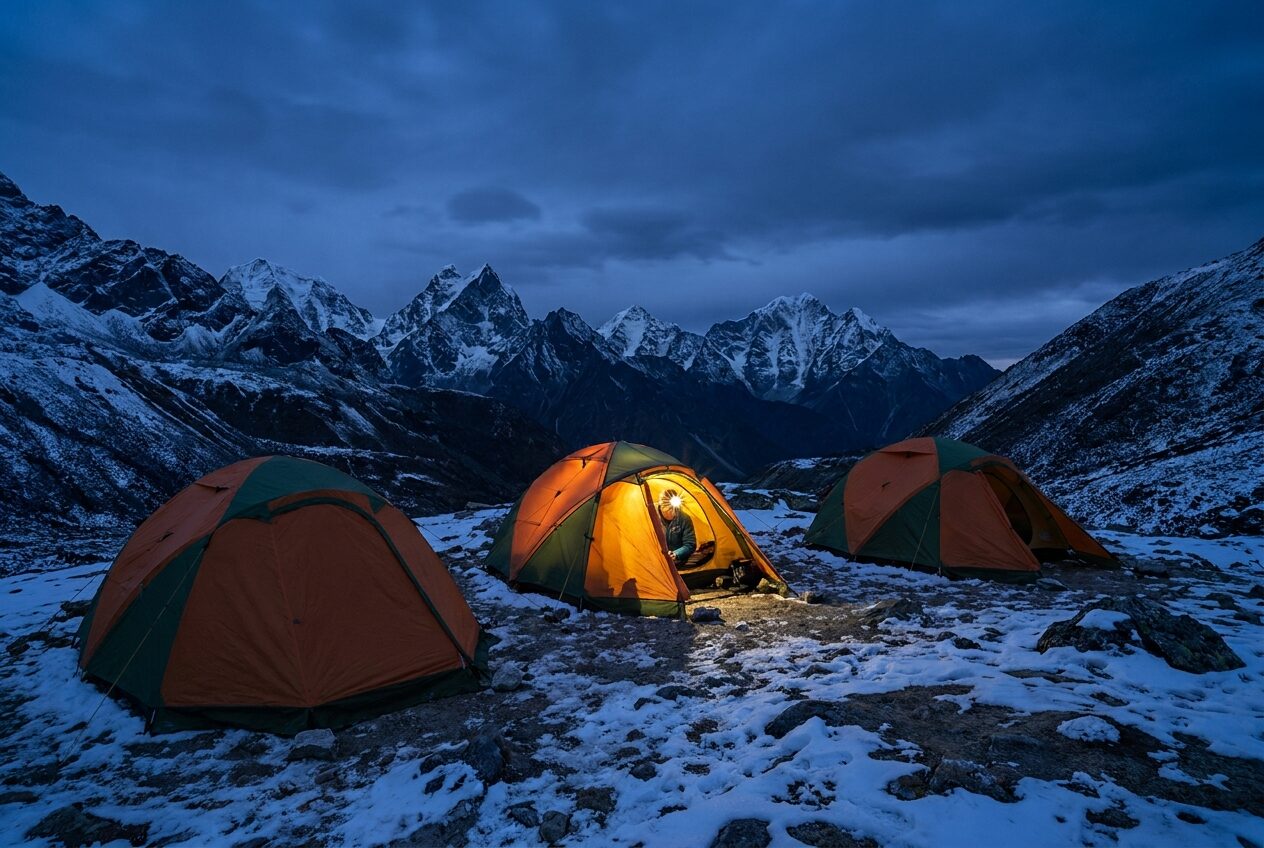
Expedition tents at dusk at a high Himalayan camp, one glowing from a headtorch inside

Why we spend two days in Leh doing "nothing"

Every season someone asks if we can trim the two Leh days from the Markha itinerary and "get going". Short answer: no. Longer answer: those days are the itinerary.

At 3,500m your blood oxygen saturation drops to somewhere in the high 80s the moment you land. Your body responds brilliantly — more red cells, deeper breathing, adjusted kidney chemistry — but it responds on its own clock: roughly one to three days per thousand metres of new altitude. Skip that and the maths catches you at 4,700m, three days from a road, as a headache that stops being a headache.

So we land and do nothing strenuous, deliberately. Old town, palace, tea. Day two adds 400m of ascent and takes it away again before bed — climb high, sleep low, the oldest trick in the book because it works. Oximeter checks every morning, logged. And the rest day at Nimaling, which looks like a gap in the schedule, is why our Kongmaru La crossing rate over nine seasons is 96% — with zero evacuations.

Patience is the cheapest acclimatisation aid ever invented. We schedule it so you don't have to be good at it.

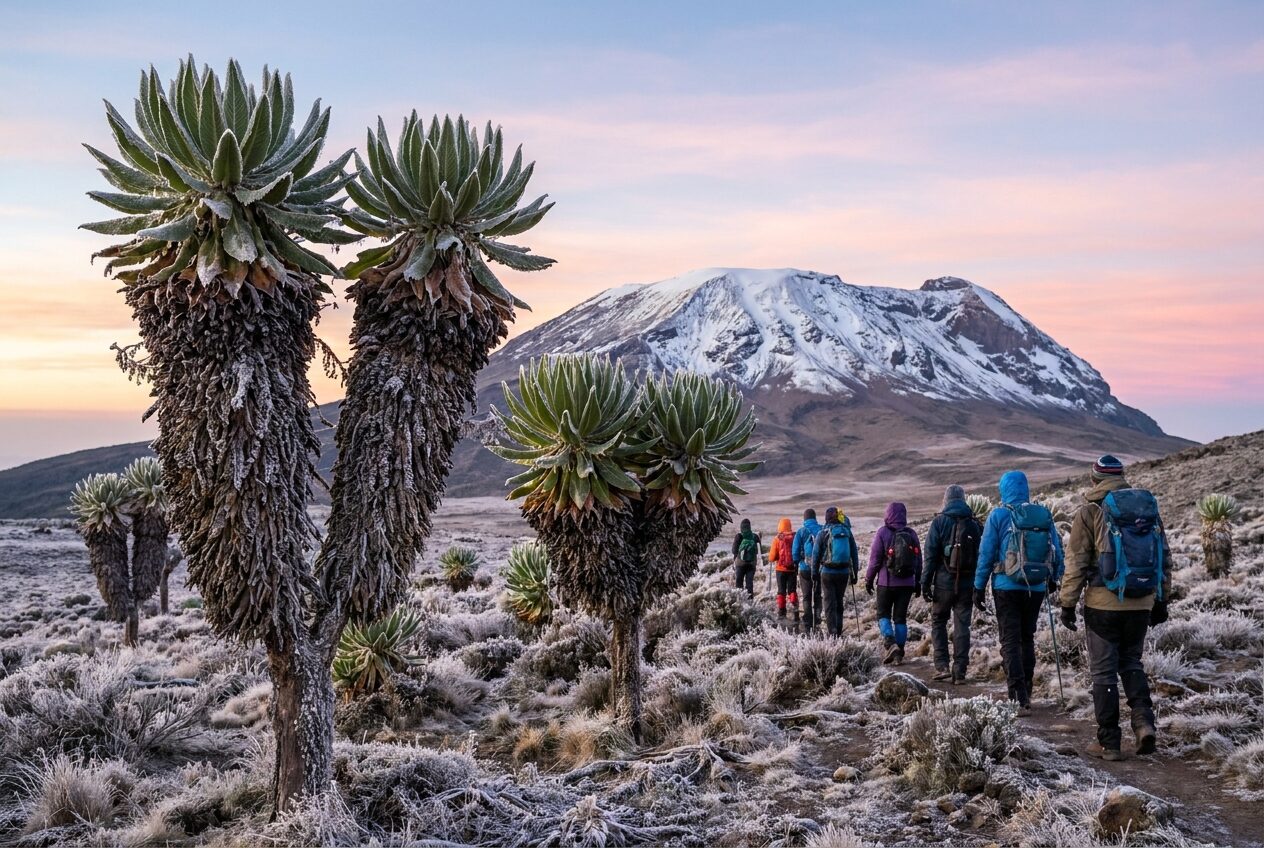
Walkers on the high shoulder of Kilimanjaro above the cloud sea, the summit dome pale in the distance

Seven mornings of oxygen: the Kilimanjaro numbers

Every morning on Kilimanjaro the oximeter goes round the breakfast circle, and the group watches the numbers with the fascination usually reserved for exam results. Here is a real set — one walker, Lemosho route, resting saturation taken before coffee.

96 83 · BARAFU 90 D1 · 2,400M D7 · DESCENT

RESTING SPO2 % · ONE WALKER · LEMOSHO ROUTE · MORNING READINGS, LOGGED

The shape matters more than any single reading. The slide from 96 to 83 over six days is not deterioration; it is the machine adapting on schedule — the dip at Barafu is the price of sleeping at 4,673m, and the bounce to 90 on descent is the whole argument for walking high and sleeping low. What we act on is the outlier: a line falling faster than the group's, or a walker bucking their own trend overnight.

There is no pass mark. There is a trend, a baseline, and a guide who has watched a few hundred of these lines. That is what the "nothing" days on the itinerary are buying — the longer argument, from Leh, is below.

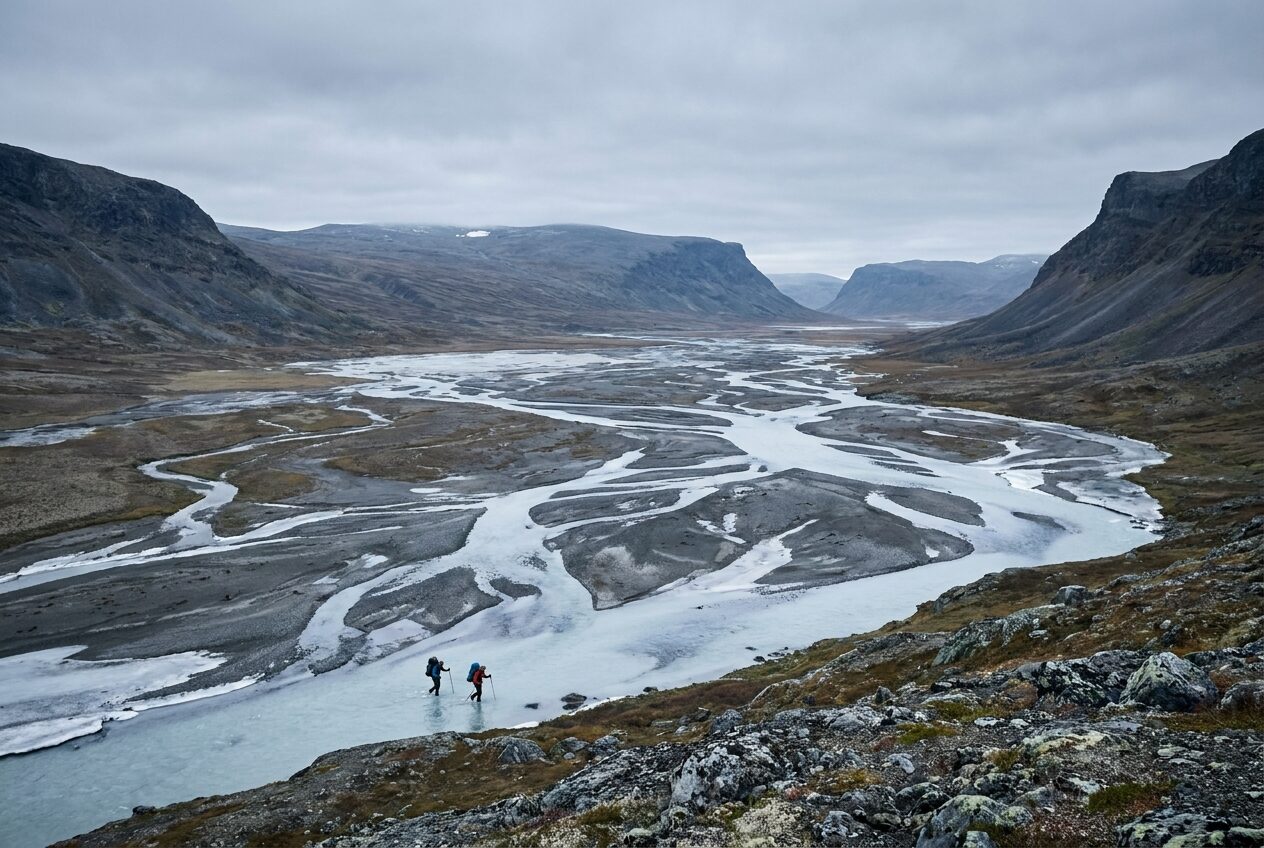
A wide braided river valley in Sarek under heavy grey sky, trackless tundra and bare peaks on either side

No huts, no bridges, no shops: feeding eight in Sarek

Sarek has no huts, no marked trails, no bridges over the big rivers and nothing to buy from one end to the other — which is precisely why it is worth walking, and precisely why the food plan is the trip plan.

The arithmetic: eight walkers, nine days, roughly 700 grams of food per person per day. Carried whole, that is fifty kilos of food across the group on day one — pack weights nobody enjoys and ankles pay for. So we split it. Five days come with us; the rest goes in by boat up Laitaure with the boatman we have used for nine seasons, cached in a barrel where Rapadalen's willow stops being a wrestling match. On day five, we walk to dinner.

The barrel costs money and a morning's detour. It is also the difference between a group that finishes the traverse upright and one that merely survives it. If your pack for nine unsupported days weighs less than twenty kilos, something important stayed home; ours weigh sixteen, because half the food travels by water. The per-item weights live in the kit room.

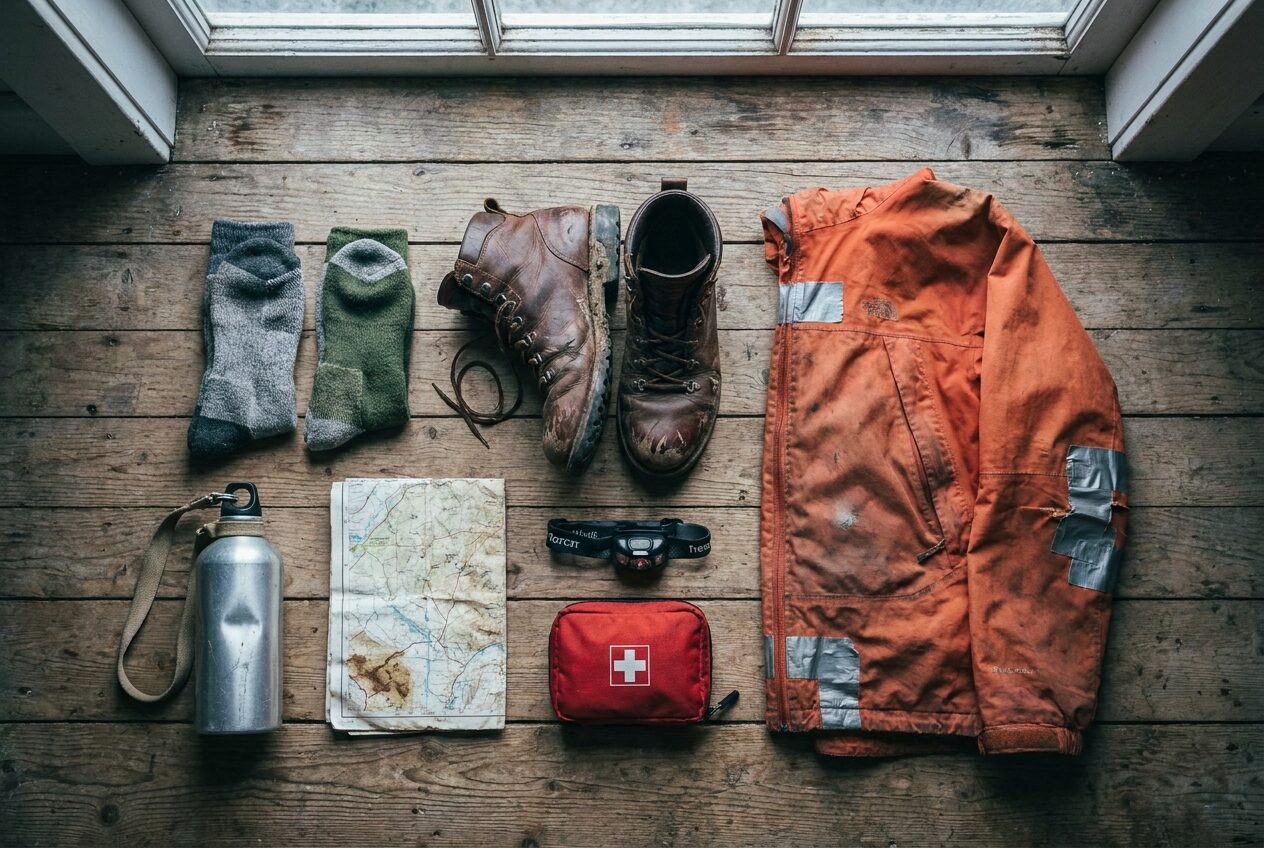
Well-worn trekking kit laid out in rows on old floorboards: scuffed boots, a taped orange shell jacket, darned socks, map, bottle and head torch

Kit autopsy: what the GR20 destroyed, and what it didn't

Nine days of Corsican granite is the most honest gear reviewer in Europe, so at Vizzavona we laid the group's kit out on the station floorboards and held the annual inquest.

Deceased: two pairs of "trail" shoes — the granite ate their toe rands by day four, because the GR20 is a scramble wearing a footpath's name — one ultralight pack whose hip belt filed itself through on a chained slab, and every sock under sixty per cent wool. Wounded but honourable: a shell jacket, taped at the shoulder, which had already done four seasons and owes nobody anything. Untouched: the boring stuff. Leather boots with a fresh scratch collection, wool socks darned twice, the £6 liner gloves that live in the chained sections.

The verdict never changes; only the accents do. Weight you carry in your legs for nine days matters — durability you discover on day four matters more. The kit room now builds the GR20 list with this trip's grave goods subtracted, grams and hire tags included.

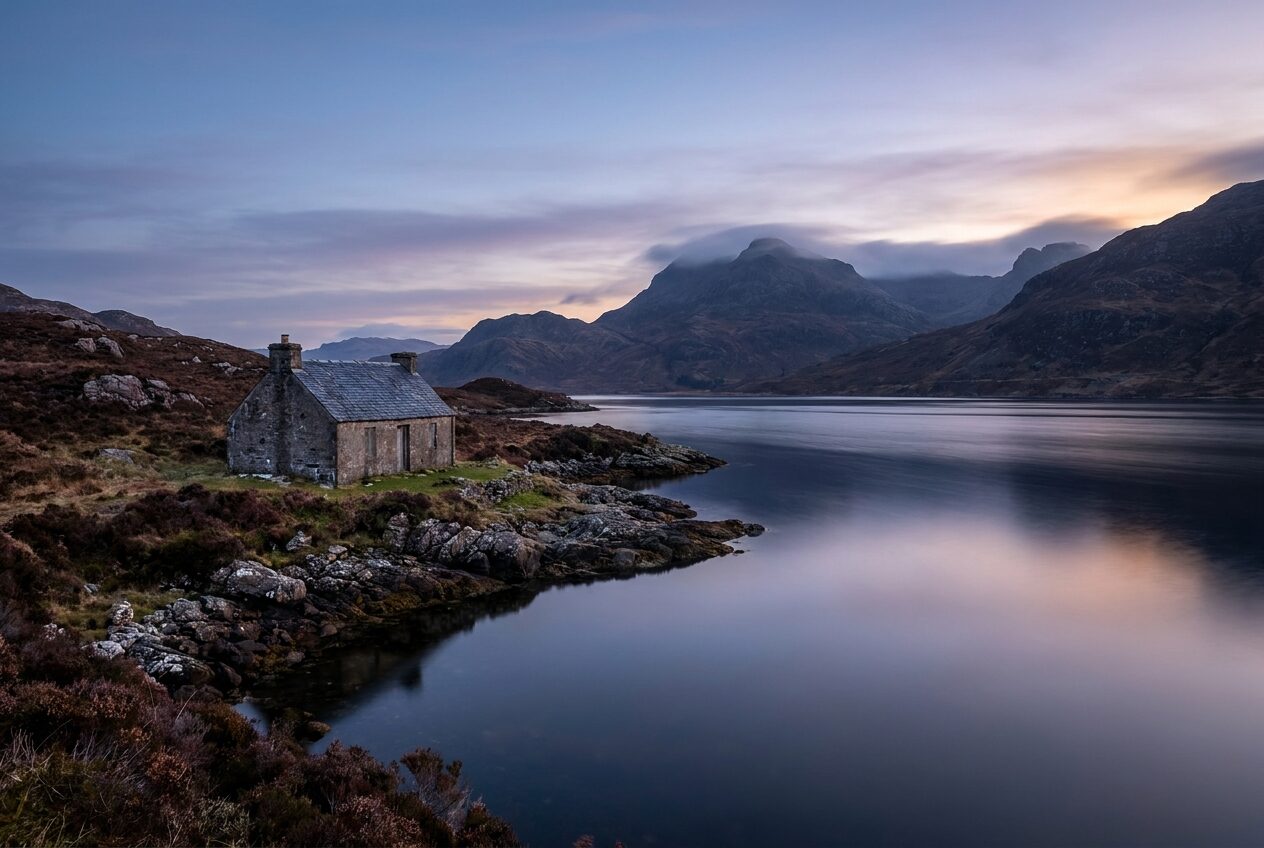
A stone bothy on the shore of a quiet sea loch in fading evening light

Bothy nights: the unwritten rules, written down

Half our Knoydart walkers have never slept in a bothy. By Saturday night they are evangelists. In between sits an etiquette that nobody hands you at the door, so here it is.

A bothy is an open, unlocked shelter maintained by volunteers — mostly the Mountain Bothies Association. It is not a hut you have booked; you have booked nothing. Arrive late and find it full, you smile and pitch the tent you carried precisely because of this rule.

The rest follows from one idea: leave it better. Carry out all rubbish, including the sad half-burnt tins in the fireplace that some previous ghost left. Bring your own fuel; a bothy with a fire and no dead wood nearby has been stripped by people less thoughtful than you. Sweep before you leave. Sign the book — it is genuinely used in searches. Groups bigger than six shouldn't rely on a bothy at all, which is one more reason ours are capped at eight with tents carried.

And the candle stub you find on the mantelpiece? Tradition says leave one too. Someone will arrive wetter and later than you did. They always do.

ENOUGH READING

Go and get a story of your own.