PERU · CUSCO · 13.33°S 72.55°W · SHOULDER · APR–OCT
Salkantay to Machu Picchu
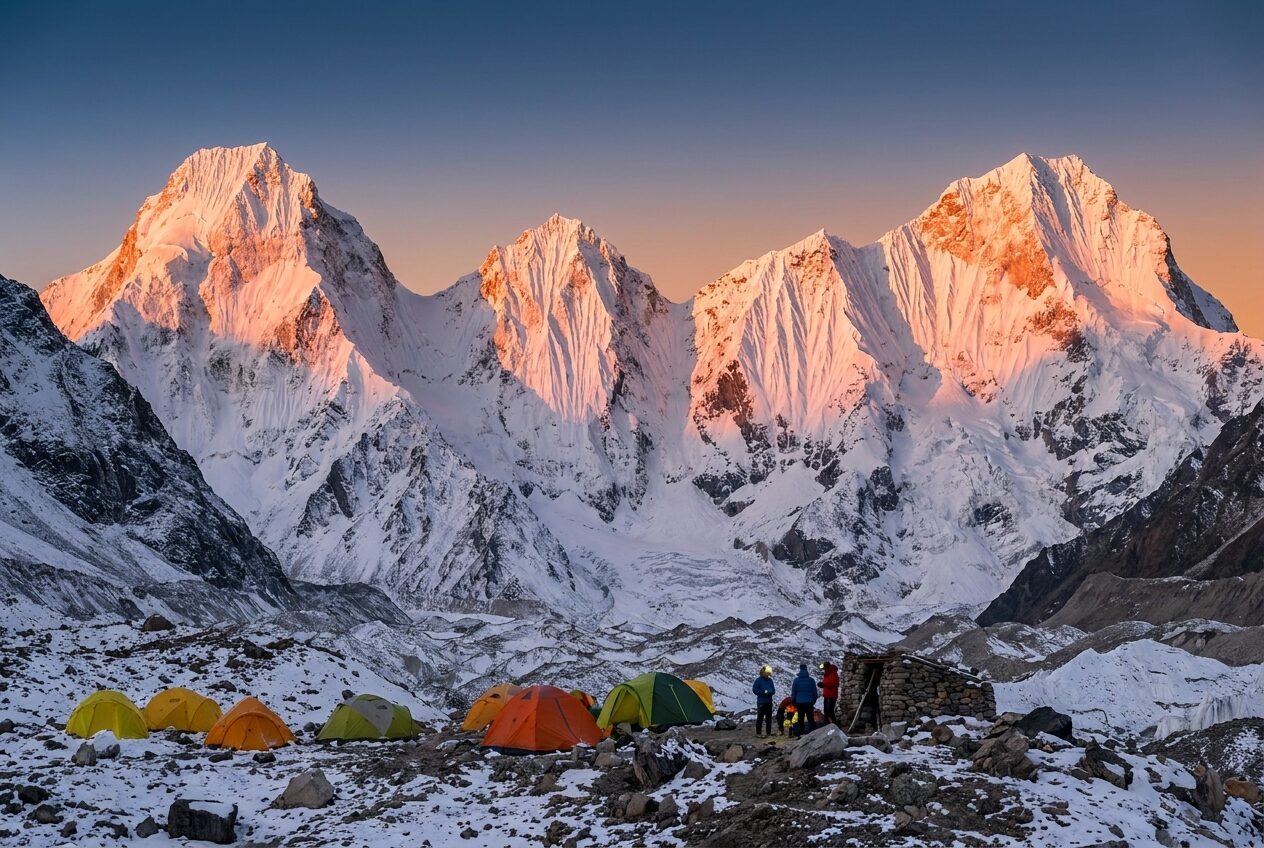
The wild way to Machu Picchu: beneath Salkantay's 6,271m ice pyramid at 4,630m, down through cloud forest where orchids replace glaciers in an afternoon, arriving at the citadel by the back door at dawn.
THE ROUTE, CHARTED
The elevation profile
GPS-logged. Camps and key points marked; the shape of the route is the honest version of the brochure.
DAY BY DAY · 7 DAYS
The itinerary
Arrival and altitude admin at 3,400m: gentle old-town walking between coca tea and the pre-trek briefing. The cathedral's guinea-pig Last Supper painting sets the tone for a week of Peru being gloriously itself.
Acclimatisation done properly: the terraces and salt pans of the Sacred Valley with a walk from Chinchero's weaving co-op down old Inca paths to Urquillos. Sleep lower than Cusco; legs briefed for the real start.
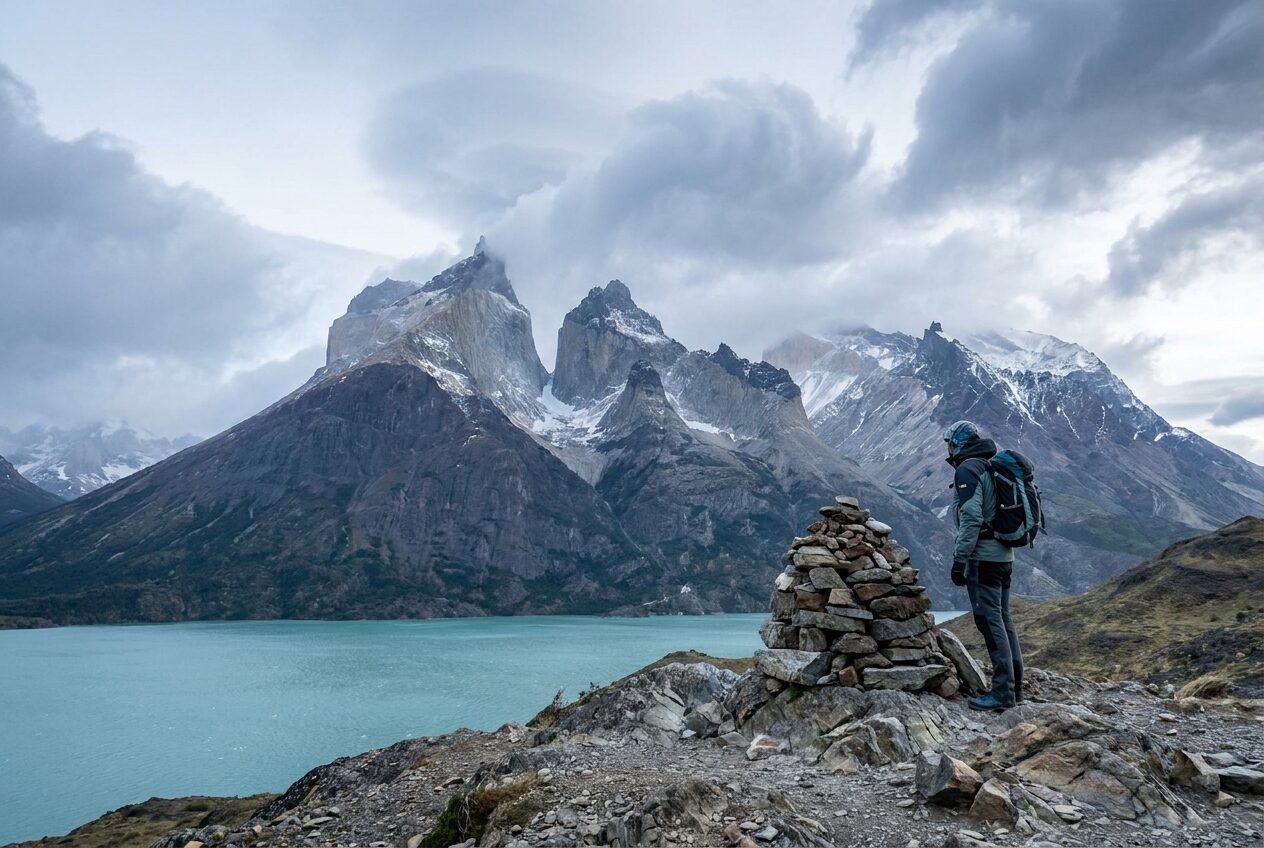
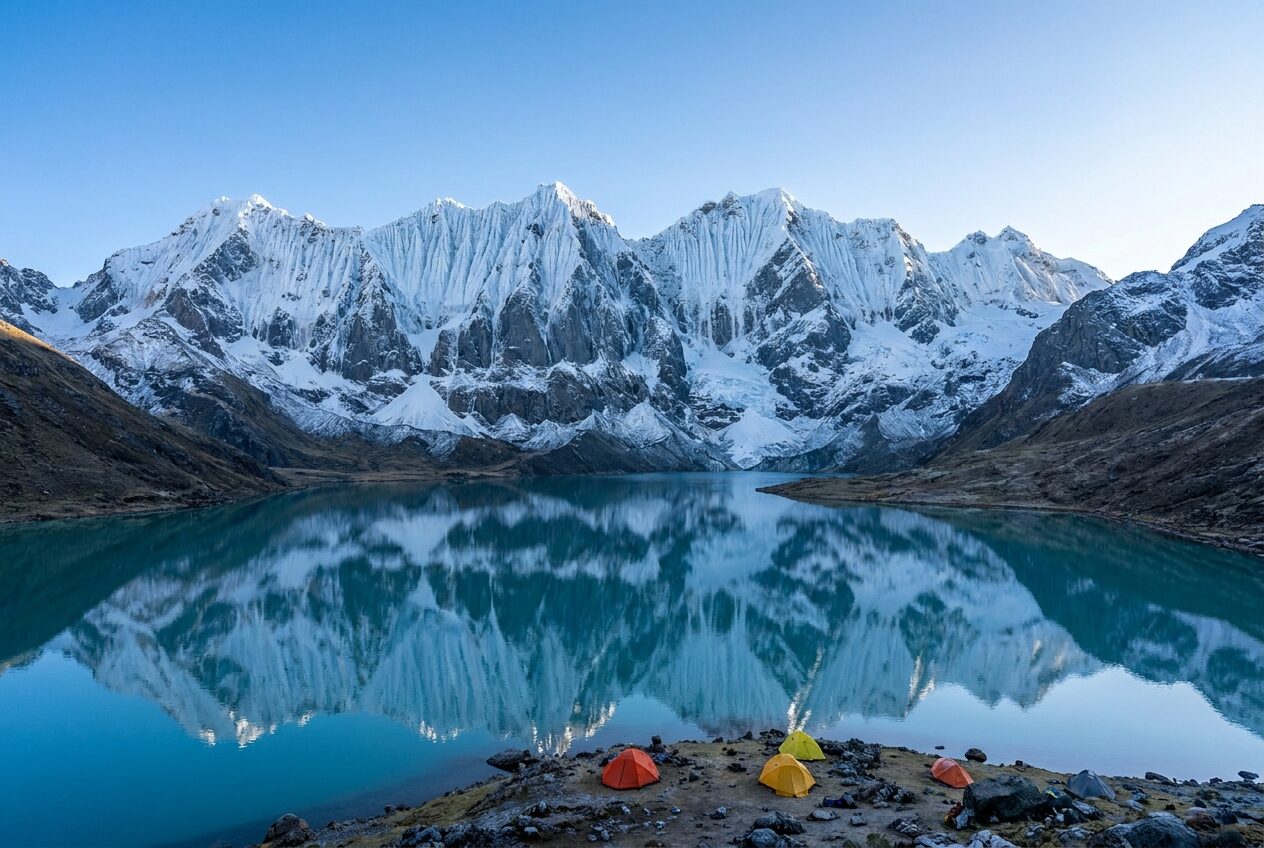
Drive to the trailhead and climb to Humantay lake, 4,220m — glacier-fed, implausibly turquoise, ringed by prayer cairns — then back to Soraypampa's mountain lodge with Salkantay filling the northern sky.
The big one: a steady dawn climb up the Rio Blanco valley to the pass at 4,630m, prayer stones stacked against the wind, icefalls creaking overhead. Then down, and down, into the first warm breath of cloud forest at Chaullay.
The costume-change day: orchids, hummingbirds, passion fruit bought through bus windows that are actually trail gates. A night on a working coffee farm at Lucmabamba — pick, roast and drink your own, insufferably, forever after.
Over the Llactapata pass on a rediscovered Inca path to the ruins that stare directly across the valley at Machu Picchu — the citadel visible, distant and patient — then down to the railway and along the river to Aguas Calientes.
First bus, Sun Gate light, and the citadel arranging itself below exactly as advertised — then a full guided morning among the temples before the train winds back toward Cusco and dinner tries to compete.
WHY THIS ROUTE
The expedition
The Inca Trail is a queue with ruins; the Salkantay route is a mountain journey that happens to end at Machu Picchu. From the turquoise shock of Humantay lake, the trail crosses the Salkantay pass at 4,630m — the sacred mountain's icefalls hanging directly overhead — then performs one of trekking's great costume changes: glacier to cloud forest in five walking hours, orchids and hummingbirds by lunch, coffee farms by dinner. We sleep in a mix of tents, mountain lodges and a coffee-farm cabin, take the hydroelectric railway's walking line along the Urubamba, and enter Machu Picchu at dawn on day seven, coming down to it from the Sun Gate the way the architecture intends. Honest note: pass day is genuinely high — Cusco acclimatisation (built in, day one and two) matters — and the citadel requires timed tickets we hold a year out; this trip books early and we say so plainly.
HIGHLIGHTS
- Salkantay pass, 4,630m, under the ice pyramid
- Humantay lake — turquoise without a filter
- Glacier-to-orchid transition in one afternoon
- Coffee-farm night: roast your own bag
- Machu Picchu at dawn from the Sun Gate
- Cusco acclimatisation days included
STRAIGHT ANSWER
Is this for you?
You should be able to say yes — honestly — to all of these:
- You can walk six-to-seven-hour days on rough ground, back to back, and enjoy most of them.
- You accept that altitude sets the schedule — this route reaches 4,630m and the guide's altitude call is final.
- You are happy in a tent, in weather, with no shower and an early kettle.
- You would rather be told the truth about a hard day than sold an easy one.
Grade 3 means grade 3. If you're not sure, ring us — we'd rather lose a booking than carry a struggle.
THE LEDGER
What £1,890 covers
INCLUDED
- Wildtrace guide (Marta Serrano) at a max ratio of 1:8
- All hut, refuge or lodge nights as described, with evening meals
- Tents, group camp kit and all meals on trek
- Daily oximeter checks and an acclimatisation schedule that is not negotiable
- Group safety kit: inReach satellite comms and expedition first aid
- Pre-trip video call, training plan and the real kit list
NOT INCLUDED
- International travel to the start point
- Personal travel insurance covering trekking to 4,630m — required, checked before departure
- Visas and permits payable on entry, where applicable
- Tips for local crew (we publish a guideline per trip)
- Sleeping bag — bring your own or hire ours (£30/trip)
- Lunches and drinks on travel days
PACK THIS, NOT EVERYTHING
Kit, previewed
The items that matter most on this route. The full list — with honest notes on what not to buy — lives in the kit room and is sent on booking.
Broken-in boots matched to the terrain. Broken-in is the load-bearing phrase.
Waterproof jacket and trousers you actually trust.
A day pack that fits — 30–35L covers almost every trip.
Headtorch plus spare batteries. Early starts are a feature.
SPF50, lip block and category 3–4 glasses. High-altitude sun does not negotiate.
Sleeping bag and mat rated for the trip's coldest night (hire available, £30).
Sheet sleeping-bag liner and earplugs. Dormitory diplomacy in two items.
2L capacity plus purification where the trip notes say so.
WHO'S TAKING YOU
Your guide
Marta Serrano
IML · SOUTHERN EUROPE & AMERICASAragonese, Pyrenees-raised, and the reason our Spanish and Andean logistics run on time. Carries a tin of saffron on every expedition and has used it at 4,600m.
HOW WE RUN IT
Max 8 walkers. inReach satellite comms carried and checked daily. Escape routes planned before we sell a single place. And the weather rule that built this company: we turn back. That's the deal. Full detail on our safety page.
NO PAYMENT AT THIS STAGE
Ask about this trip
Send this and a guide rings you back — Tuesday or Thursday evening, usually. Fifteen minutes, honest questions both ways, no hard sell.
IF THIS, THEN ALSO