SPAIN · PICOS DE EUROPA · 43.19°N 4.85°W · SUMMER · JUN–SEP
Picos de Europa Traverse
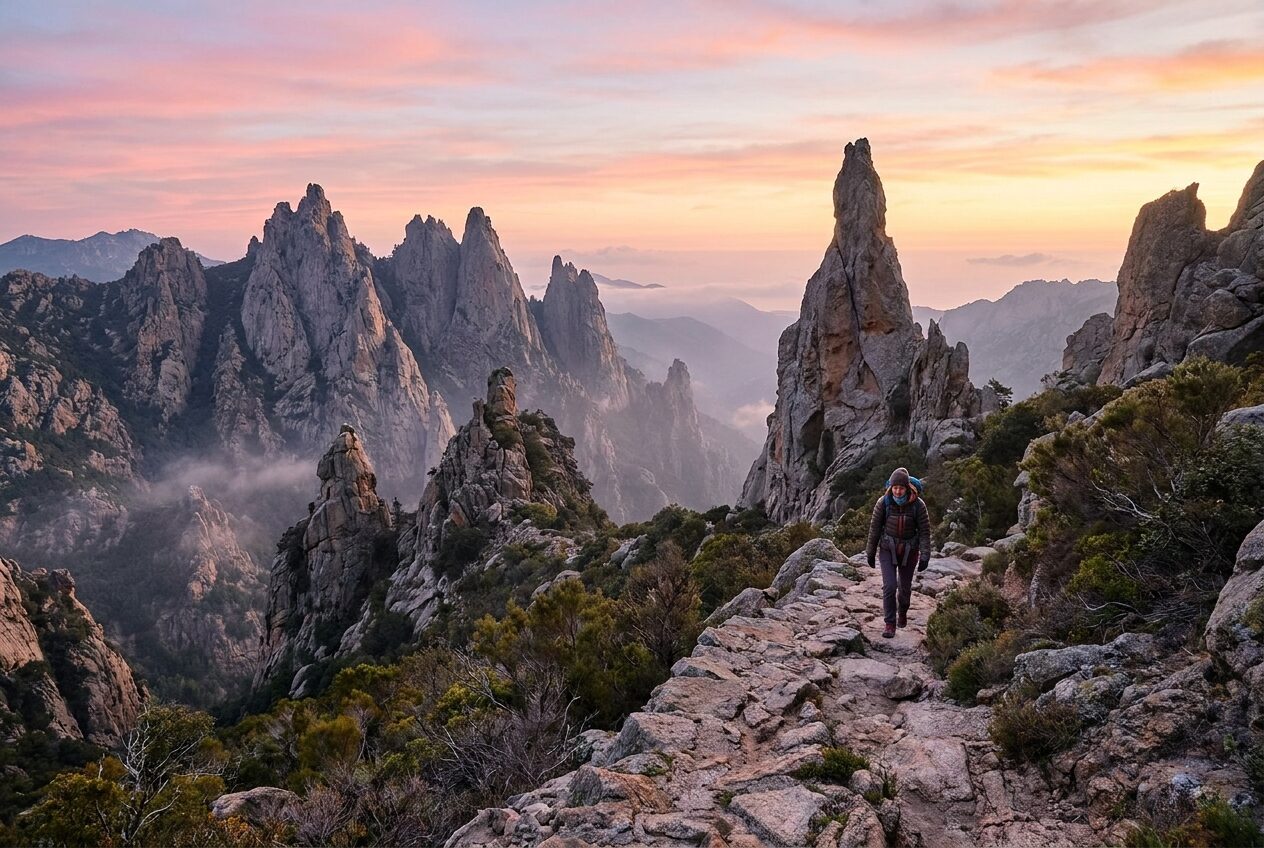
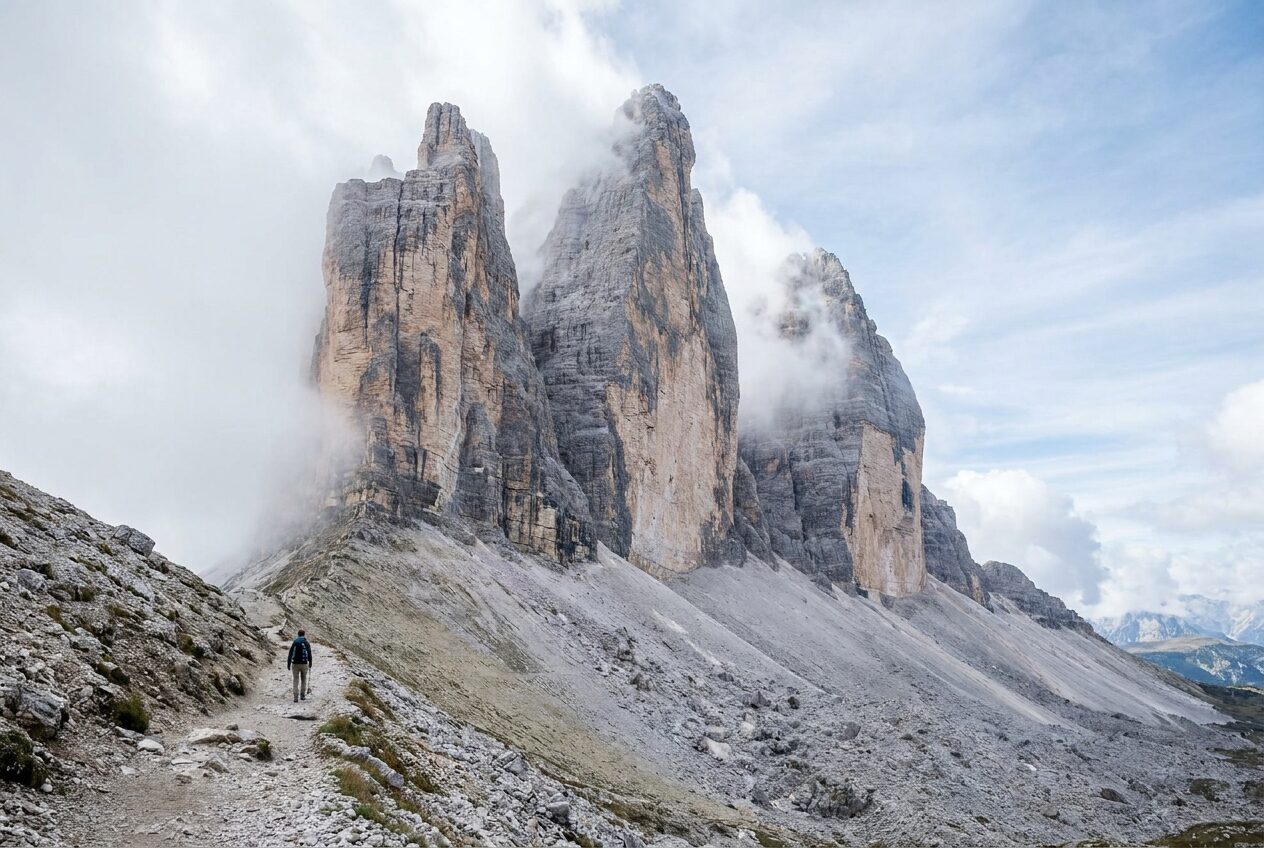
Limestone like nowhere else in Europe: 2,600m towers twenty kilometres from the sea, paths cut into faces, refugios where the wine is included in the confusion, and the Cares Gorge to finish.
THE ROUTE, CHARTED
The elevation profile
GPS-logged. Camps and key points marked; the shape of the route is the honest version of the brochure.
DAY BY DAY · 6 DAYS
The itinerary
A short, steep introduction up the medieval mule path to Bulnes, the last roadless village in Spain. Evening walk to the mirador for a first sight of the Naranjo catching fire at sunset.
The long pull out of the green and into the stone: 1,300m of ascent to Refugio de Urriellu at the foot of the great blank west face. Climbers' headtorches dot the wall after dark like slow fireflies.
The traverse's high point: over the 2,344m col among orange screes and karst towers, past Cabaña Verónica — a hut made from an aircraft-carrier gun turret, genuinely — and down to Fuente Dé's cable-car balcony.
A gentler day through the Áliva's cowbell pastures and old mining tracks, brushing the villages of the Liébana valley where the cheese course is a threat and a promise, then up again towards the northern rim.
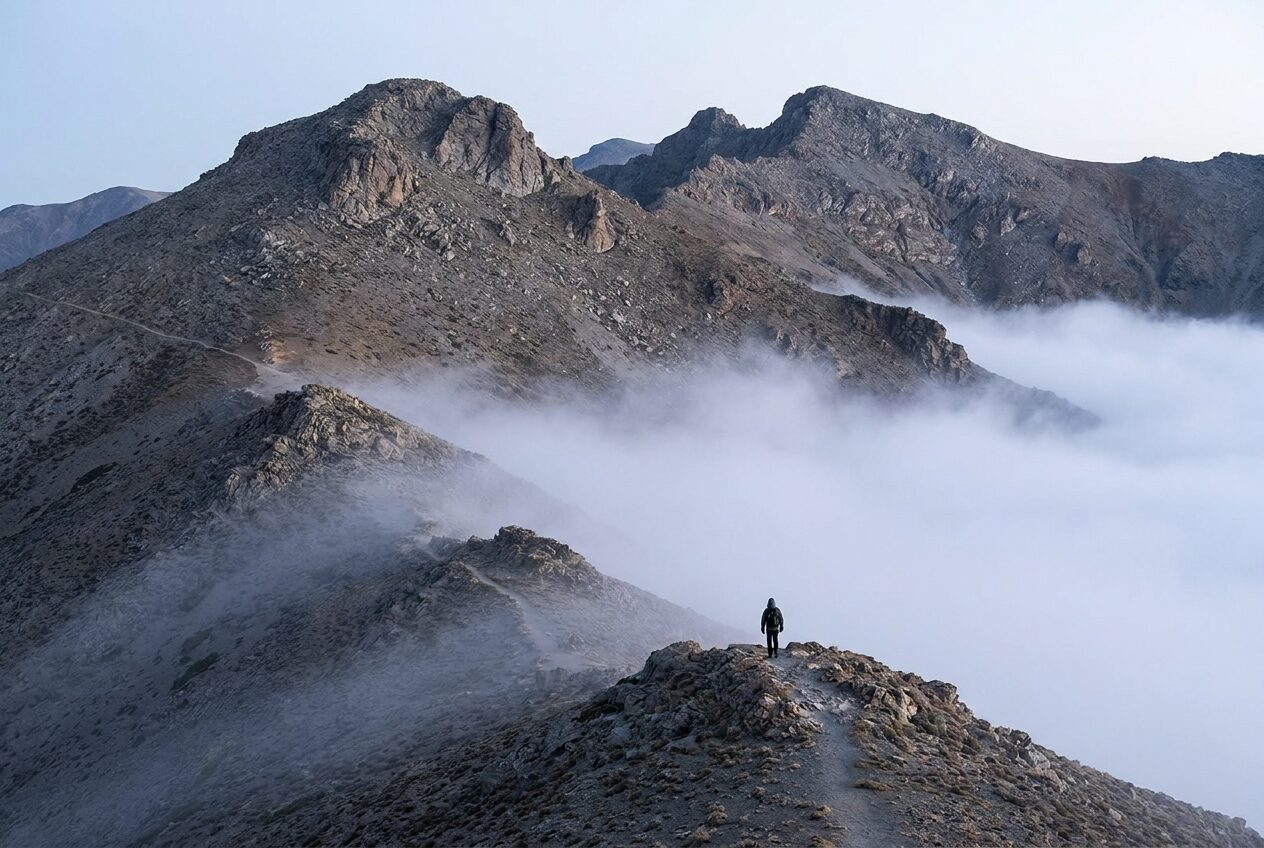
Ridge walking above the great gorge with the Cornión massif across the void: chamois on the screes, griffon vultures riding the walls, and a final refugio night with the sea visible at dusk, forty kilometres north.
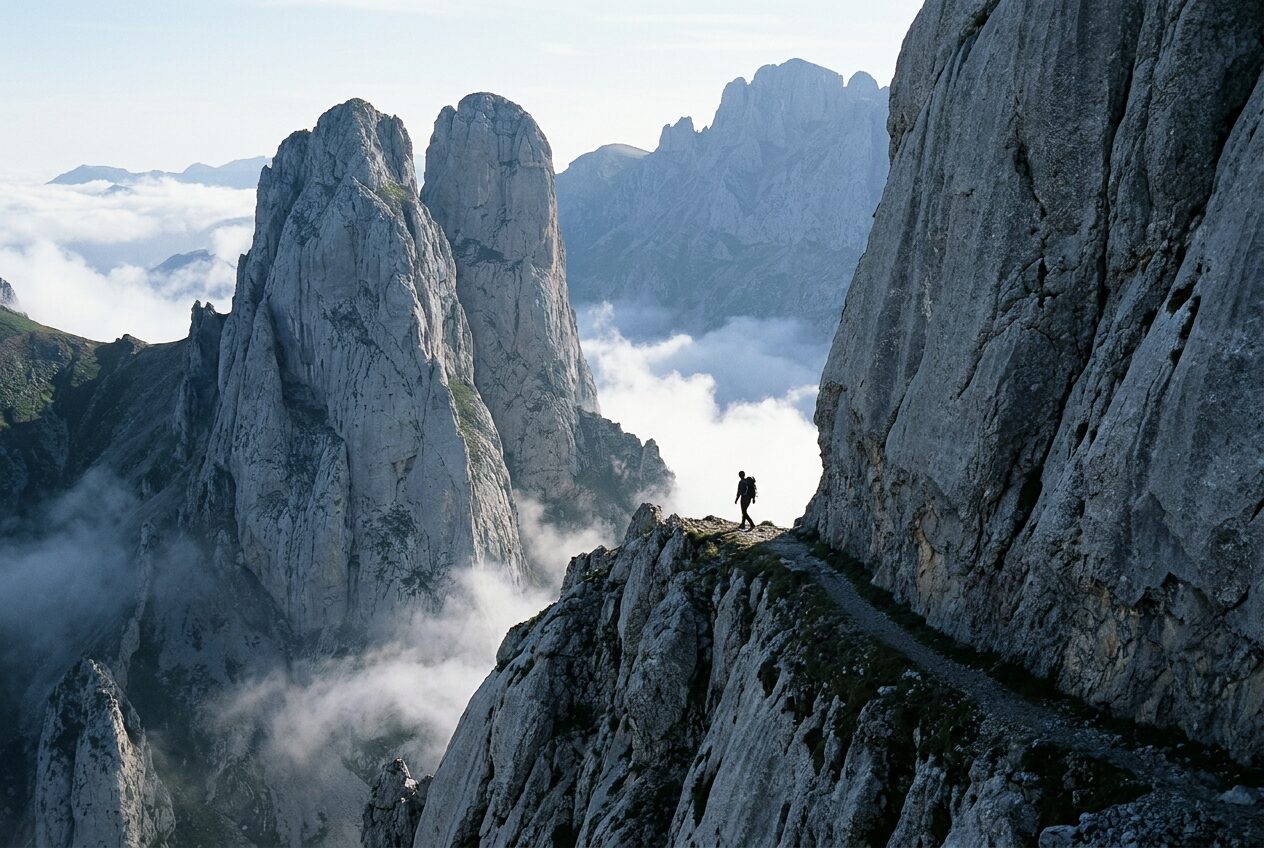
Down into the abyss and along the famous path cut into its wall — a kilometre of rock above, two hundred metres of drop below, a channel of glacier-green water arguing the whole way — back to Poncebos. Sidra in Arenas ends it properly.
WHY THIS ROUTE
The expedition
The Picos de Europa were the first land Spanish sailors saw coming home, which explains the name and understates the drama: a compressed knot of limestone rising 2,600m within sight of the Atlantic, split by gorges a thousand metres deep. We cross the Central Massif south to north, sleeping high in refugios where dinner is fabada and the blankets smell of altitude, passing directly beneath the blank west face of the Naranjo de Bulnes — Spain's most famous piece of rock. Days run six to seven hours on rocky, occasionally airy paths; bags travel by mule between huts. The finish is the Cares Gorge path, blasted into the wall of an abyss by hydro workers a century ago. Honest note: you need a steady head for exposure on days three and six; nothing technical, everything memorable.
HIGHLIGHTS
- The Naranjo de Bulnes west face from your pillow
- Horcados Rojos col, 2,344m
- Bulnes — the village with no road
- Chamois all but guaranteed; wallcreepers possible
- Mule-carried bags, day-pack walking
- The Cares Gorge finale
STRAIGHT ANSWER
Is this for you?
You should be able to say yes — honestly — to all of these:
- You can walk six-to-seven-hour days on rough ground, back to back, and enjoy most of them.
- You have a steady head for exposure — there is hands-on ground here, protected where it matters.
- You would rather be told the truth about a hard day than sold an easy one.
Grade 3 means grade 3. If you're not sure, ring us — we'd rather lose a booking than carry a struggle.
THE LEDGER
What £980 covers
INCLUDED
- Wildtrace guide (Ben Okonkwo) at a max ratio of 1:8
- All hut, refuge or lodge nights as described, with evening meals
- Group safety kit: inReach satellite comms and expedition first aid
- Pre-trip video call, training plan and the real kit list
NOT INCLUDED
- International travel to the start point
- Personal travel insurance covering trekking to 2,344m — required, checked before departure
- Visas and permits payable on entry, where applicable
- Tips for local crew (we publish a guideline per trip)
- Sleeping bag — bring your own or hire ours (£30/trip)
- Lunches and drinks on travel days
PACK THIS, NOT EVERYTHING
Kit, previewed
The items that matter most on this route. The full list — with honest notes on what not to buy — lives in the kit room and is sent on booking.
Broken-in boots matched to the terrain. Broken-in is the load-bearing phrase.
Waterproof jacket and trousers you actually trust.
A day pack that fits — 30–35L covers almost every trip.
Headtorch plus spare batteries. Early starts are a feature.
Sheet sleeping-bag liner and earplugs. Dormitory diplomacy in two items.
Grippy gloves for cabled or rocky sections; a helmet where needed is provided.
2L capacity plus purification where the trip notes say so.
A proper insulated jacket. Evenings are where trips are enjoyed or endured.
WHO'S TAKING YOU
Your guide
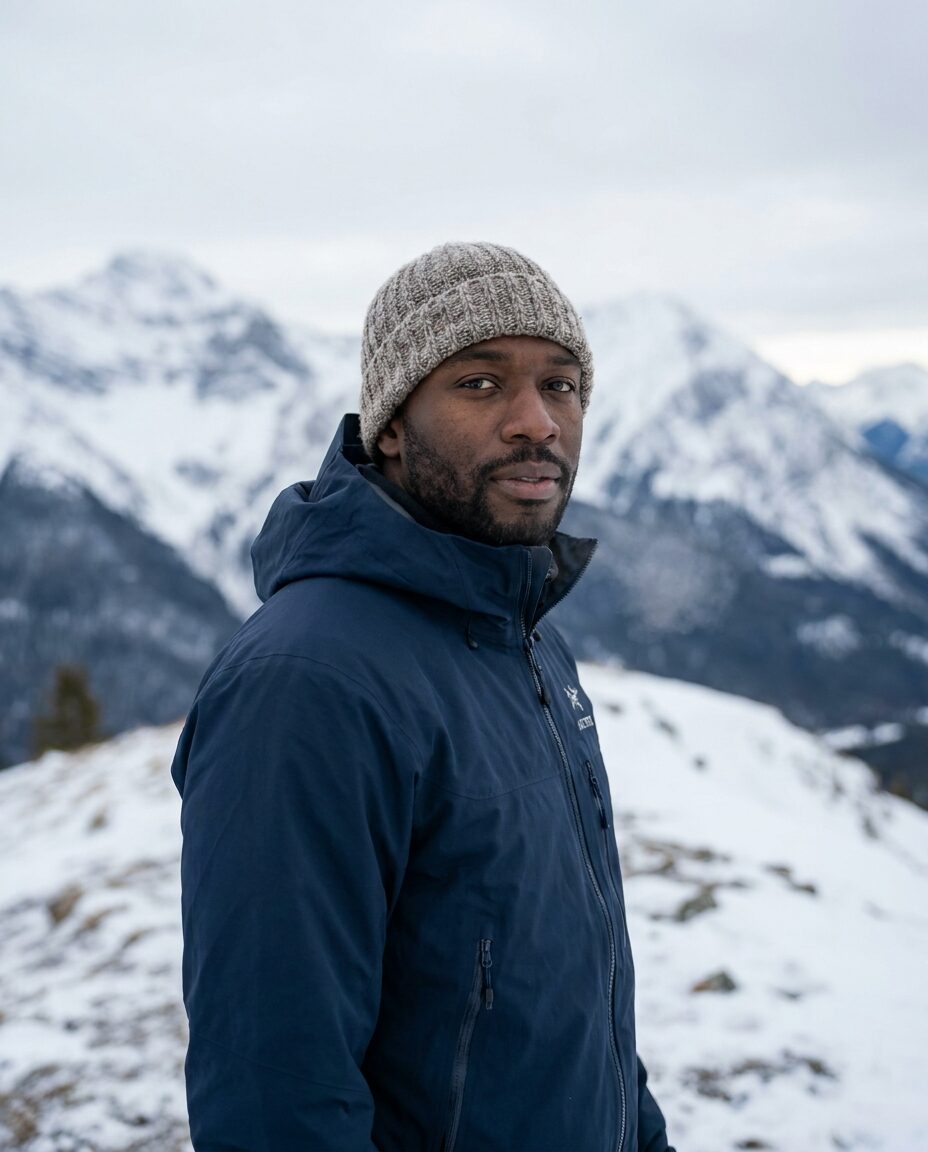
Ben Okonkwo
IML · ALPINE LEADInternational Mountain Leader with twelve Alpine seasons. Leads the big European tours. Has carried a cafetière over every col in the Vanoise and regrets none of it.
HOW WE RUN IT
Max 8 walkers. inReach satellite comms carried and checked daily. Escape routes planned before we sell a single place. And the weather rule that built this company: we turn back. That's the deal. Full detail on our safety page.
NO PAYMENT AT THIS STAGE
Ask about this trip
Send this and a guide rings you back — Tuesday or Thursday evening, usually. Fifteen minutes, honest questions both ways, no hard sell.
IF THIS, THEN ALSO